First 'Char Festival' on a Jamuna Sandbar: Boat Rides, Pituli and Baul Songs Launch Village Tourism in Sirajganj

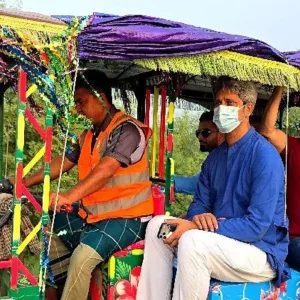
A 'Char Festival' has been held in Sirajganj in colourful fashion for the first time in the country. The festival was organised to present boat journeys on the Jamuna River, the natural beauty of the riverine chars and rural life there as tourism attractions, and to build connections with the people of these isolated settlements.
The day-long festival took place on Friday (23 October) in the char area of Mechhra Union under Sirajganj Sadar Upazila. It was organised by the cooperative and social organisation 'Samadhara', with Sirajganj tourism initiative 'Smart Tourism' as the event partner.
The participation of many families from the town was striking. The spontaneous participation of children in particular made the whole event lively. All the festival's arrangements were completed with the participation of the char's own people.
The organisers say river-centred travel holds important potential for tourism in Bangladesh. Boat journeys on the Jamuna, the chars rising from the river, the vast sandbars and the way of life of char people can create a distinctive experience for tourists. Presenting that potential and introducing the char areas as village-tourism destinations was the idea behind the festival.
The event was arranged around char nature, rural life, folk culture and local heritage. It featured Sirajganj's traditional food pituli, Baul music and a kite festival. Kites of many colours filled the sky.
Kites and food were distributed among the children at the festival. Guests were served the traditional pituli on banana leaves. Decorations used Sirajganj's geographical indication (GI) product, the gamchha. From the food service to the decorations, every element carried the identity and heritage of the rural settlement.
Baul songs, kite flying and enjoying the char environment made the event vibrant. Alongside town families, the festival gave children a chance to become acquainted with char nature, rural culture and ways of life.
Samadhara president and journalist Abdullah Al Safi said, 'The chars have their own culture, heritage, natural beauty and enormous tourism potential. A new field of tourism can be created around boat journeys on the Jamuna and the nature of the char areas. Through the Char Festival, we wanted to present the potential of the chars to everyone.'
He added that the event was arranged involving char people and emphasising local food, decoration and culture, so that townspeople, especially the new generation, could become familiar with char life and heritage. Their goal, he said, is to increase contact with the people of isolated settlements through such festivals, preserve local heritage and create new possibilities for village tourism.
Samadhara general secretary and journalist Pratik Mahmud said, 'We are delighted to organise the Char Festival in Sirajganj for the first time. Through this event we have tried to present the lifestyle, heritage, culture and potential of the char people to everyone. We want such events to increase people's interest in the char areas and strengthen our relationship with the char people.'
Smart Tourism founder Md Aslam Uddin said, 'We are proud to hold this event to highlight the tourism potential of Sirajganj and the char areas. We hope the Char Festival will be a new addition in introducing the chars as a new destination for the country's tourism. In the days ahead, we want to take village tourism forward through more events like this.'
Also present at the festival were Jahurul Islam Babu, chairman of the accounting department of Sirajganj Government College, writer and organiser Shyamoli Khan, poet Shamima Afroz Happy, entrepreneur Shamima Sultana Sathi, Samadhara treasurer Babla Bashar, businessman Enamul Probal and local media workers.
The organisers hope that initiatives like the Char Festival will make it possible to present Jamuna-centred boat travel and the natural beauty of the chars as new tourism destinations. At the same time, contact between townspeople and char residents will grow, the new generation will become familiar with rural heritage, and a path will open for village tourism to develop with local participation.