After Two Decades Watching Cosmic Explosions, NASA’s Swift Telescope Will Plunge Back to Earth on Wednesday
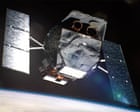
NASA’s Neil Gehrels Swift Observatory, which has spent two decades studying the most powerful explosions in the cosmos, is expected to re-enter the Earth’s atmosphere on Wednesday, burning up in the process.
The satellite, which was designed to operate with its three telescopes for just two years, is no longer able to steer or observe, and its re-entry is uncontrolled.
The US Space Force predicts the 3,200lb spacecraft will hit the atmosphere at about 3.30am EST on 4 November. NASA says most of the spacecraft is set to burn up, but some components are expected to survive.
In a blog post, the agency said re-entry locations of any surviving components can vary from hemisphere to hemisphere and depend on when it re-enters, adding that surviving fragments are limited between 20.6 degrees south latitude and 20.6 degrees north latitude.
NASA also said the risk of harm coming to anyone on Earth is unlikely — approximately 1 in 2,100. NASA and Space Force will continue to monitor the re-entry and update predictions.
The observatory was launched in 2004 to explore the universe’s most powerful explosions, called cosmic gamma-ray bursts, and quickly return its observations of their location and strength to Earth.
Over the course of its operational life, the observatory detected and tracked more than 2,000 gamma-ray bursts, considered the most powerful explosions the universe has seen since the big bang.
NASA says these bursts of energy occur approximately once per day; they are brief but intense flashes of gamma radiation, come from all different directions, and can last from a few milliseconds to a few hundred seconds.
But scientists do not know what causes them, theorising that they may be the birth of a black hole in a massive stellar explosion, the collision of two neutron stars, or some other phenomenon. Swift was launched as part of NASA’s medium explorer, or Midex, programme.
In July, Swift observed a wandering mega black hole shredding a star, which occurs when a star passes fatally close to a supermassive black hole; crumbs of the splintering star heat up as they swirl around the black hole, creating a glow astronomers can see from far across the cosmos. Scientists call such an occurrence a tidal disruption event.
Robert Stein, a research fellow at the University of Maryland, College Park and NASA’s Goddard Space Flight Center in Greenbelt, Maryland, said at the time that they were looking for these star-shredding events as a way to find otherwise invisible supermassive black holes wandering away from the galactic cores where they usually reside. A paper in The Astrophysical Journal Letters said the event outshone its entire host galaxy in ultraviolet wavelengths, temporarily radiating with the light of about 10 billion suns.