If the Senate ties 50-50 after the midterms, who controls it? Past splits offer the only clues
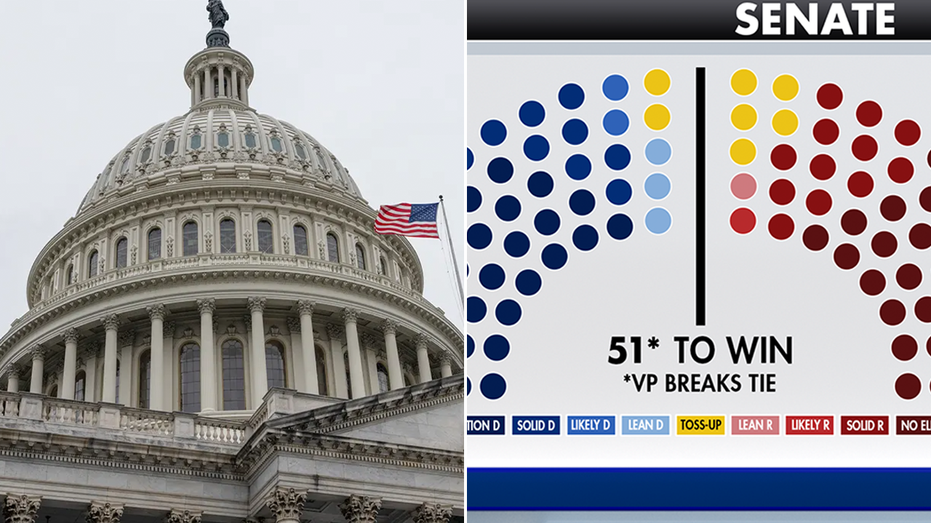
A tied Senate could leave control of the chamber uncertain after the 2026 midterm elections. None of the Senate's 44 standing rules serves as a tiebreaker, and the Founders provided no system to determine which side is in the majority. Nor is it written anywhere that the President's party is automatically thrust into the majority.
For an ordinary tied vote there is a mechanism: the vice president, who doubles as president of the Senate, can cast a tie-breaking vote. The vice president does not even have to vote if the tied result is going the way he or she wants, since by rule tie votes go down to defeat in the Senate. A chamber split 50-50 is a different problem.
The Senate has been tied before. There was a tie in 1881 after resignations and political manoeuvring, and another for a period in 1954; nearly ten per cent of all senators died during the two-year Congress that ran from early 1953 to early 1955.
Two recent ties show what the Senate did to sort out the majority. One came after the 2000 election and the other after the 2020 election, and both took a while to resolve.
In 2000 it took until early December to determine that Democrat Maria Cantwell of Washington had defeated Republican Senator Slade Gorton, establishing a 50-50 Senate. At the same time the Supreme Court settled the Florida election dispute between President George W. Bush and Vice President Al Gore.
Senate Majority Leader Trent Lott, a Republican, and Minority Leader Tom Daschle, a Democrat, then engineered a power-sharing agreement that aligned with the election of Vice President Dick Cheney. Lott served as majority leader and the Republicans technically held the 'majority', but the pact granted Daschle some special floor powers. Republicans chaired each committee, while both parties had equal representation on each panel.
The full Senate had to ratify the agreement, and it did so with all 100 senators signing on, clearing two filibuster hurdles of 60 votes each along the way. Republicans got on board fearing Democrats would stall President Bush's agenda, and Democrats agreed because the arrangement left them better off than an outright minority.
The 2020 tie was established even later — two days into the new Congress, on 6 January 2021, the day of the Capitol riot. Democrats Jon Ossoff and Raphael Warnock of Georgia both won runoffs to set the 50-50 split.
Former Senate Republican leader Mitch McConnell knew those 2001 dynamics well. In 2021 he insisted that Democratic leader Chuck Schumer propose, word for word, the same accord Lott and Daschle had hammered out.
That raises the question for a potential tie in 2027: is there the political will in the Senate, let alone the votes, to agree to such a compact? President Trump would still be president and Vice President JD Vance still president of the Senate, and what they would say about it is unclear.
The Senate is not compelled to present a dedicated 'majority' or 'minority' at all. The concept of a majority leader dates only to the early 20th century, and the words do not appear in the Constitution, which names only the Speaker of the House and the President of the Senate. Without a power-sharing agreement, presiding duties could fall to Vance, current President Pro Tempore Chuck Grassley, a Republican, or possible Democratic President Pro Tempore Patty Murray — the latter two being the most senior senators of their parties.
Precedent for settling a Senate tie therefore exists, but it hinges on political will. If disputes arise over seating members — over the Alaska Senate race or another contested result — the climate on Capitol Hill could turn toxic, and few may be willing to sign on to anything.