

From education to cancer care: Global summit calls for better, joined-up support for children
With 412 million children living in extreme poverty, a global summit in Uzbekistan has called for greater investment in children's healthcare, education and protection, alongside closer coordination between services that often operate separately.
This was at the core of the Samarkand Declaration, adopted on Thursday at the end of a two-day gathering attended by representatives from more than 100 countries.
The declaration calls for stronger social protection systems, nationally determined targets and regular reporting on the quality and effectiveness of services for children.
According to UNICEF, two-thirds of the child-related UN Sustainable Development Goal indicators it monitors are off track, raising concerns about progress towards the 2030 targets.
Providing access to essential services does not necessarily guarantee children receive the care and support they need, summit participants said, pointing to a gap between services existing and services working.
UNICEF Regional Director Édouard Beigbeder said services should invest not sector by sector, but in ways that complement each other, which will give a better result for children.
Beigbeder also highlighted the importance of investing in social workers and healthcare professionals, rather than focusing exclusively on infrastructure.
Uzbekistan's First Lady Ziroat Mirziyoyeva, who received the WHO Director-General's Award 2026 for her contribution to childhood cancer care, also called for closer cooperation between services. She said medical, social and psychological support should be integrated so parents do not have to go from one institution to another in search of assistance.
Turkey's First Lady Emine Erdoğan questioned whether conventional indicators adequately reflect children's experiences. Going to school does not always mean receiving a quality education, she said, not being hungry does not mean being properly nourished, and not being subjected to violence does not mean being loved and valued.
Protecting children from violence means services need to work together, particularly when victims require medical treatment, psychological support, social assistance and legal protection. Global Head of Child Protection at Save the Children International Rebecca Smith said children face violence at home, in conflict zones and increasingly online, and stressed that survivors should be able to seek support without facing stigma.
Uzbekistan used the summit to show how different services can be brought together to support children and families. Shahnoza Mirziyoyeva, First Deputy Director of Uzbekistan's Social Protection Agency, said that for a parent, a child is not the future, a child is the present. In an address to participants, President Shavkat Mirziyoyev emphasised that children's wellbeing should be measured by their quality of life today, not their future economic contribution. According to figures presented by Mirziyoyev, preschool enrolment has increased from 27.7% to 78%, while the number of inclusive schools has risen fivefold over the past two years.
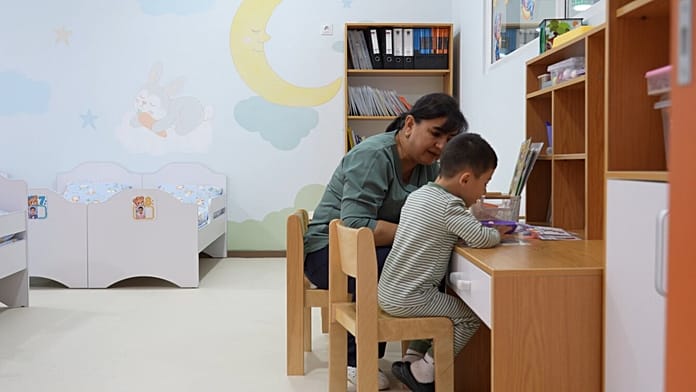
Visiting First Ladies also attended the opening of the new Imkon rehabilitation centre in Samarkand, which combines preschool education with medical, psychological and educational support for children with disabilities. The facility can accommodate 150 children and provide outpatient rehabilitation services to up to 100 children aged three to 18 each month. Lebanon's First Lady Nehmat Aoun, who visited the centre, said countries should learn from one another's experiences to improve children's education, care and protection.
The importance of coordinated healthcare becomes particularly evident in childhood cancer, where a child's chances of survival differ dramatically depending on where they live. A parallel international congress in Samarkand examined inequalities in early diagnosis, specialist treatment and access to essential medicines. According to the World Health Organization, around 400,000 children and adolescents develop cancer worldwide each year. High-income countries cure more than 80%, compared with fewer than 30% in many low- and middle-income countries.
Carlos Rodriguez-Galindo, Executive Vice President of St. Jude Children's Research Hospital, said delayed or missed diagnoses are among the main obstacles. The only way to address childhood cancer, he said, is by a comprehensive package. Such an approach requires earlier diagnosis, specialist care, reliable access to medicines and continued support for children and families. The WHO has set a global target of at least 60% survival for children with cancer by 2030.
The congress also announced the creation of a Global Network to support children with serious and life-threatening illnesses, including cancer. Bringing together first ladies and spouses of heads of state, the initiative aims to strengthen international partnerships and improve access to care. Uzbekistan's first lady will chair the network for two years. Mirziyoyeva also proposed an international mechanism to improve children's access to essential medicines. An exhibition titled 'The World Through a Child's Eyes' presented initiatives connecting healthcare, education, social protection and family support. How far the Samarkand Declaration is implemented will now decide how much these promises change children's daily lives.


