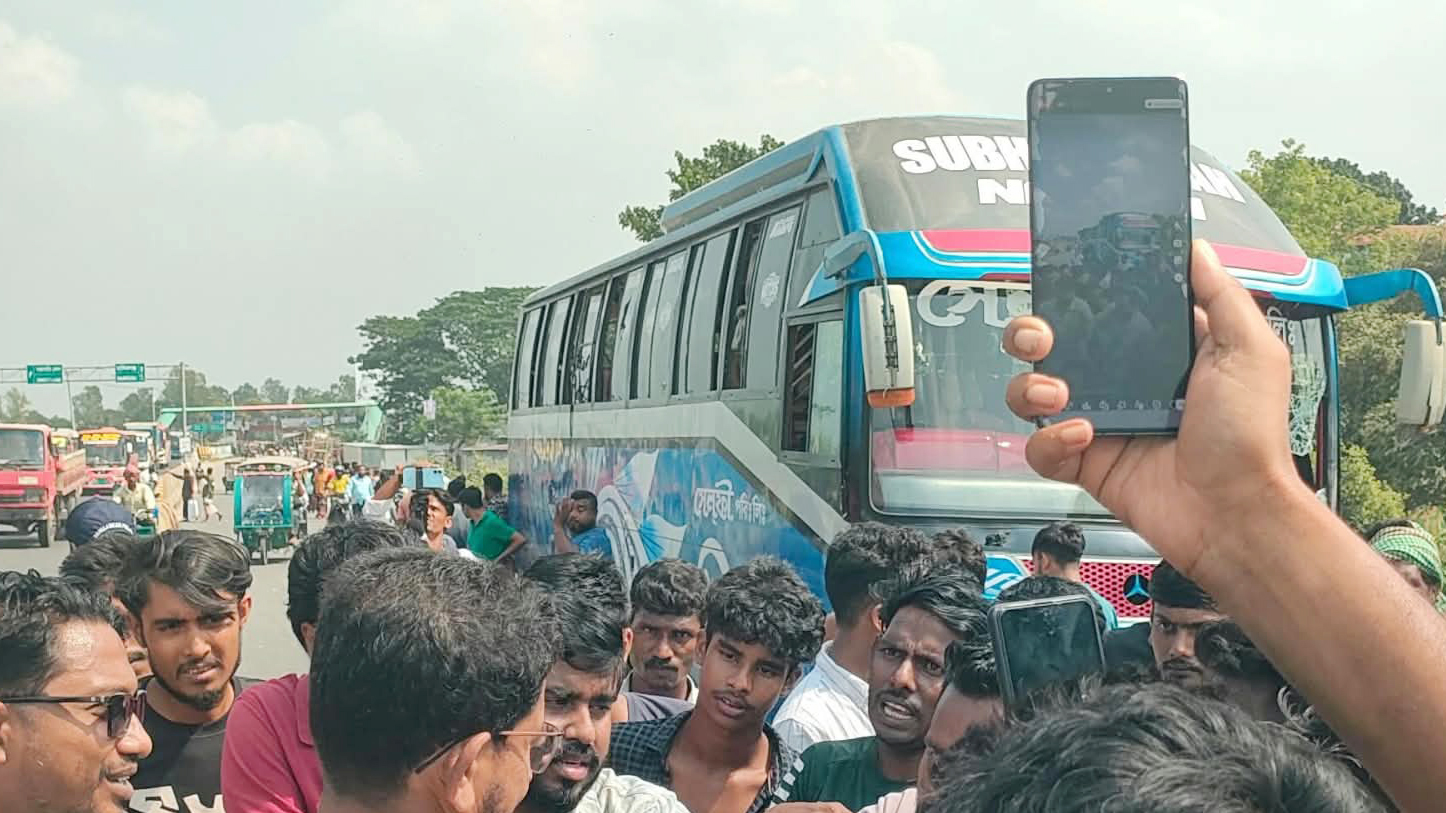
'I Want to Live to See My Son's Killers Tried': Two Human Chains in Netrokona for Slain Journalist Alif, a Mother's Plea at the Centre
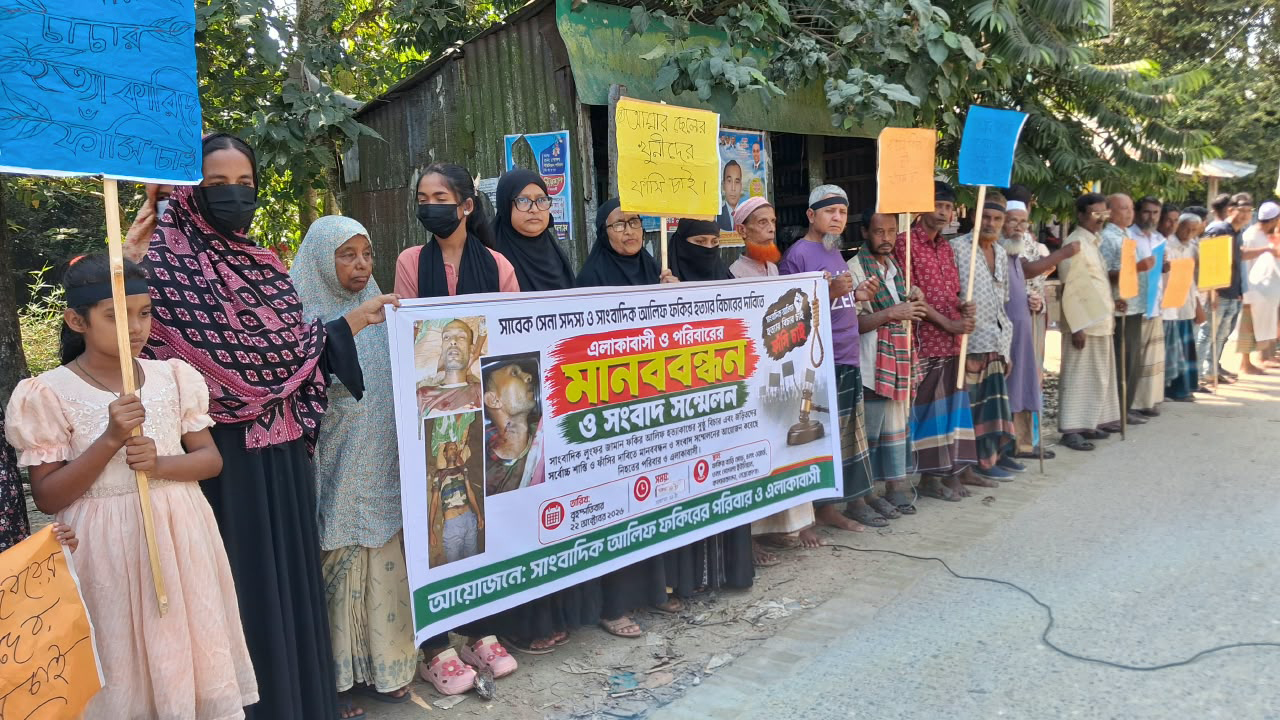
Relatives, local residents and journalists formed human chains in Kalmakanda and in Netrokona town on Thursday demanding a proper investigation into the murder of journalist Lutfuzzaman Alif Fakir, the swift arrest of those involved, and exemplary punishment. Two separate programmes on the same day carried the same message — that justice in this killing must be fast and visible.
The first human chain formed at around 11 a.m. on Thursday at Fakirbari crossing in Shunoi village of Gogla union in Kalmakanda upazila, by Alif's own home. Members of his family and local residents took part and demanded that those involved in the murder be quickly identified, arrested and given exemplary punishment.
Alif's mother, Jobeda Akter, his elder brothers Shahidul Islam Fakir and Sadek Fakir, his sisters Kalpana Akter and Mila, local resident Nazmul Hasan, schoolteacher and former union parishad member Sanchay Nandi, and other residents joined the programme. With almost the entire family present, the gathering was heavy with emotion.
In a tearful voice, Jobeda Akter said: 'I want to live to see my son's killers tried. Let them be arrested quickly and their punishment ensured.' Her words became the central note of both of the day's programmes. Other speakers likewise demanded a fair investigation and justice for Alif's murder.
A second human chain was held the same day at around noon in front of the district press club at Muktarpara in Netrokona town. Organised under the banner of the Rural Journalist Foundation, it drew the press club's former vice-president and freedom fighter Haider Jahan Chowdhury, former general secretary Mukhlesur Rahman, journalist Ershadul Haque Joni, and journalists working in various media outlets.
Speakers at the second chain demanded not only the quick arrest and trial of those involved in the murder, but also an environment in which journalists can work safely. Their point was that when attacks and killings of field-level journalists do not lead to swift justice, the same risk returns again and again.
The background is that on the night of October 15, journalist Lutfuzzaman Alif Fakir was shot dead beside his in-laws' home in the Telnajia area of Durgapur upazila in Netrokona. His wife filed a case naming eight unidentified people as accused.
Police have so far arrested two suspects in the investigation. A man named Apurba was arrested on October 18 and was later questioned on a four-day remand. Another man, Ashikur Rahman Prangan, was arrested on October 20 and is also being questioned on a three-day remand. Prangan, 21, was produced before Netrokona's Senior Judicial Magistrate Court-2, which granted the remand.
Khandaker Shaker Ahmed, officer-in-charge of Durgapur police station, said two people have been arrested on suspicion of involvement and are being interrogated on remand under court orders. Police hope the questioning will yield important information about the murder, he said, adding that the case is being investigated with due importance and that they hope to unravel the mystery and arrest the masterminds soon.
The slain Alif worked as the Netrokona correspondent of the private IPTV channel Ruposhi Bangla. He also ran a Facebook page called 'Detective Article', where he wrote about smuggling and various criminal activities and irregularities in the border area. Whether that work had any connection to the killing is a subject of local discussion, although investigators have not yet announced any conclusion on the point.
Netrokona being a border district, offenders sometimes try to flee across the border after committing a crime, which creates some complexity in making arrests. Police say they are working in coordination with other law-enforcement agencies.
After Thursday's two human chains, attention now turns to the progress of the investigation. Family and journalist community make the same single demand — that the case not stop at arresting suspects, but identify the planners behind the killing and bring them swiftly to trial, so that, in Jobeda Akter's words, she herself may live to see her son's killers tried.