Kansas Senate Debate Splits Over Trump Himself: Marshall Says the President Is Not Always Right, Hamilton Calls Biden's Border Policies a Disaster
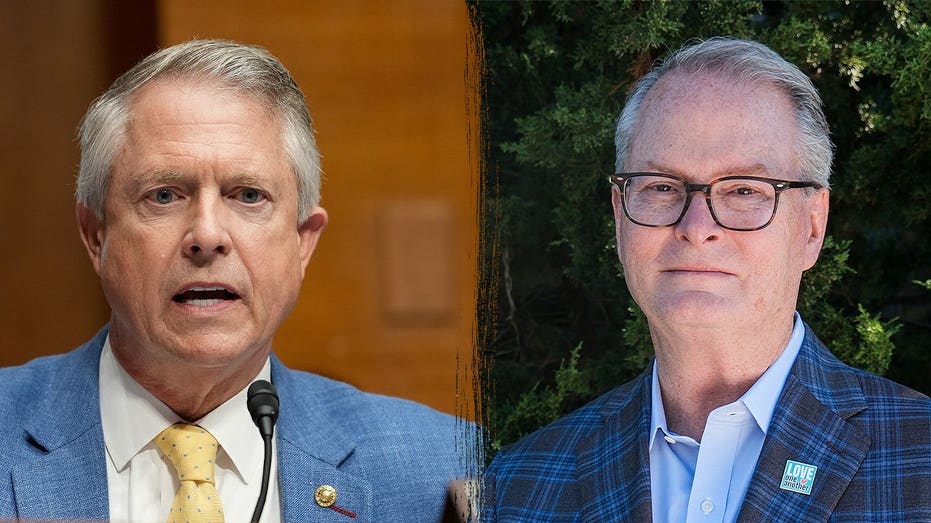
Republican Senator Roger Marshall and his Democratic challenger Adam Hamilton clashed on Wednesday night in a Kansas Senate debate that ranged over President Donald Trump, immigration, Iran, transgender athletes, artificial intelligence and personal controversies surrounding both candidates.
The hour-long showdown came less than two weeks before Election Day. Marshall is seeking a second term, while Hamilton, a longtime pastor, is trying to become the first Democrat elected to the U.S. Senate from Kansas since 1932. With Republicans and Democrats battling for control of the Senate, the race has drawn growing national attention — and Trump himself travelled to Kansas earlier this week to campaign for Marshall.
The debate turned contentious almost immediately, opening with the controversies that have fuelled attacks against both men. Marshall was confronted with a New York Times review that found his former medical practice had sued more than 700 patients over unpaid bills. He responded that the practice gave away three to four million dollars of charity care every year, but that it was also a business, with 300 employees, a mortgage payment and electric bills to meet.
Hamilton, meanwhile, was questioned about his handling of allegations involving a volunteer at his church's summer camp who was accused of sexual abuse. He acknowledged that he should have made sure the individual did not return to the camp after an initial investigation, saying he should have checked that the man was not going back, and that the failure was a mistake on his part.
Trump then moved to the centre of the debate after moderators played footage from the president's campaign appearance for Marshall in Kansas earlier in the week, in which Trump told the crowd to pretend that he himself was on the ballot. Marshall was asked whether Trump's support meant Kansans should expect him to back every part of the president's agenda. His answer was no: he said there had been multiple times when he objected to Trump.
Pressed to name a specific disagreement, Marshall pointed to recent immigration enforcement in southwest Kansas and to Trump's approach to beef imports. Joking that he can disagree with his wife even though his wife is always right, he added that President Trump is not always right either. Even so, he urged Trump voters to turn out for him, arguing that electing Hamilton could help Democrats capture the Senate.
The two rivals then found themselves in agreement when the moderator asked each candidate how many genders there are. Marshall said there are two — a boy and a girl — noting that he had delivered 5,000 babies, almost half of them boys and half girls. Hamilton likewise answered that there are two genders, male and female.
From there the debate turned to transgender participation in women's sports. Hamilton said decisions over athletic eligibility should generally be made locally, but he was unequivocal on whether biological males should compete against females: he has a 12-year-old granddaughter, he said, and does not want biological men or boys competing against her in a way that could harm her, because it is not a fair fight. Marshall argued that by high school boys need to be in boys' sports and girls in girls' sports, and accused national Democrats of pushing transgender ideology. Hamilton later accused Marshall of using the issue to pick on and bully people.
On artificial intelligence the candidates stood at opposite poles. Hamilton called for greater federal oversight and compared the emerging technology to the development of nuclear power and nuclear weapons, arguing that just as a Nuclear Regulatory Commission was created, the same is needed for AI. But when the moderator pressed him to identify specific federal regulations he would support, he admitted he did not yet have an answer, saying even experts are struggling to understand the technology's potential dangers — dangers he described as a potential existential threat to the human race.
Marshall advocated a light-touch approach focused on national security, transparency, protecting children and privacy, while criticising a one-size-fits-all global order for artificial intelligence. The exchange underlined how deep Washington's divisions run over how — and how tightly — the new technology should be regulated.
Towards the end, Hamilton sought to put distance between himself and former President Joe Biden after moderators challenged his claim that he would lead from the middle, citing his past donations to Democrats including Biden, former Vice President Kamala Harris and Representative Sharice Davids, and asking him to name a progressive policy he opposed. Hamilton replied that the Biden policies on the border were a disaster and that he believes in strong and secure borders. He added that he is not somebody who favours the Socialist Party, but somebody who stands in the middle.
Hamilton also reiterated during the debate that he would not support Senate Minority Leader Chuck Schumer for majority leader if Democrats capture control of the chamber. On midterm Election Day, November 3, Kansas voters will decide which argument carried the night — Marshall's claim to experience, or Hamilton's bid to change nearly a century of history.