Canada Unveils a $6.2bn Package to Shield Steel and Auto Industries as Trump's Tariffs Bite, in a Major Announcement by Carney
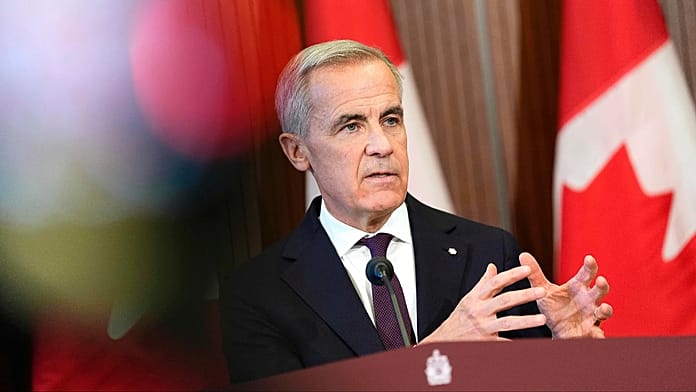
Canada has announced a C$6.2 billion (€5.7 billion) package to protect its steel and auto industries from US tariffs, as Prime Minister Mark Carney warned that Washington has permanently altered a trade relationship built over decades.
Carney and Ontario Premier Doug Ford jointly unveiled the plan on Wednesday, directing $3.7 billion (€3.4 billion) to steelmakers and $1.8 billion (€1.65 billion) to automakers over five years, with $1.1 billion (€1 billion) of the auto funding coming from the federal government in Ottawa.
The announcement came the same day US-owned Cleveland-Cliffs confirmed layoffs at its Hamilton, Ontario, plant, underlining the human cost of the trade dispute.
'US tariffs have upended a trade bargain that's existed for decades,' Carney said. 'They've raised costs for American families while putting Ontario workers and businesses at a disadvantage.'
The damage to the auto sector is already visible in the trade figures: Canadian auto exports to the US have fallen more than 10 percent, while US exports to Canada have dropped more than 20 percent, a decline Carney said hurts both sides of the border.
'Tariffs make both our industries weaker and reduce choice for our families,' he stressed.
Carney confirmed he spoke at length with President Trump on Wednesday, covering trade, Iran and the Middle East.
He signalled no breakthrough, but said Canada remains ready to negotiate. Talks collapsed in August after Trump imposed 50% tariffs on around $20 billion (€18.4 billion) in Canadian goods, prompting Canadian retaliation.
Ford was direct about what the dispute has done to bilateral ties. 'No matter what happens in the midterms, no matter who sits in the White House, we're not going back to the way things were,' he said.
Carney has set a target of doubling Canadian exports to non-US markets within a decade, acknowledging that an integrated North American auto industry may no longer be Washington's priority.
'Their approach has changed,' he said. 'So must ours.'
Meanwhile, the day took a sharper diplomatic turn when the US Embassy issued a statement accusing Canadian politicians of seeking to influence next month's American midterm elections.
The embassy named Industry Minister Mélanie Joly, for discussing retaliatory tariffs targeting Republican states, and Ford, for running a US television ad featuring former President Ronald Reagan criticising tariffs — the ad that prompted Trump to walk away from trade talks in October 2025.
Both leaders rejected the allegations, and so did independent analysts. 'The implicit assumption that Canada could significantly alter the outcome of the midterms is absurd,' said Daniel Béland, political science professor at McGill University. Alongside the economic fight of the tariff war, the political strain in Washington-Ottawa relations is now out in the open.