Making Whiskey at Home Can Mean Prison: US Supreme Court to Review 150-Year-Old Distilling Ban
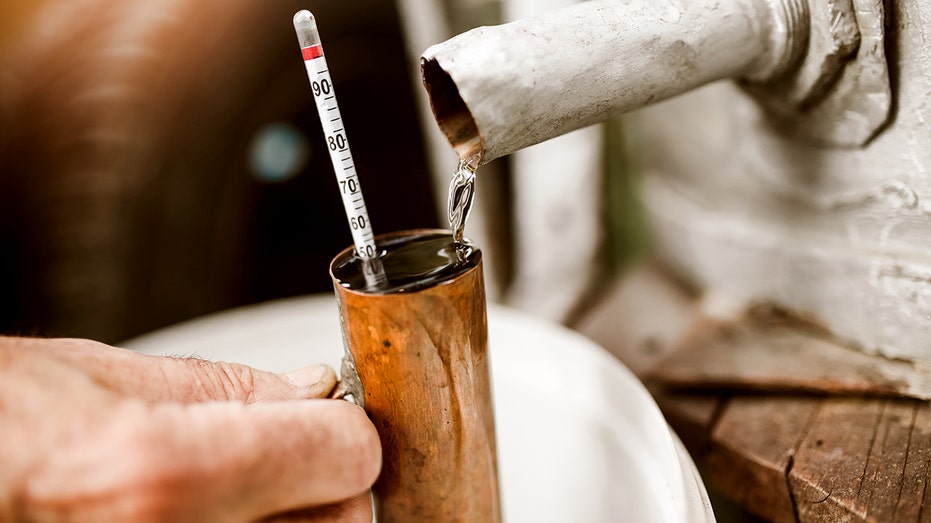
Americans can legally brew beer and make wine at home, but producing even a small amount of whiskey could land them in federal prison. The future of that 150-year-old prohibition is now set to be decided by the US Supreme Court, and those involved believe the case could have implications far beyond the liquor cabinet.
The justices agreed on Monday to review the Reconstruction-era restriction. The law, dating to 1868, was originally enacted to combat liquor tax evasion.
Under federal law, producing distilled spirits at home can carry penalties of up to five years in prison, a $10,000 fine and possible property forfeiture. In other words, even making a small quantity for personal use carries the same level of offence.
Among those challenging the prohibition is John Ream, an Ohio brewery owner and former aerospace engineer. He wants to distill small quantities of spirits at home for personal consumption, and that is why he has taken up the legal fight.
The challengers are represented by the Ohio-based Buckeye Institute. Its president and CEO, Robert Alt, says the Supreme Court's decision to take the case is a significant development for home-distilling enthusiasts. 'This is a real opportunity for both whiskey and freedom,' he said.
The central question in the case, however, is not alcohol but the scope of congressional power. At its heart is this dispute: does Congress's constitutional authority to collect taxes also allow it to prohibit an otherwise lawful activity inside a person's home? As Alt put it, the case boils down to what the scope of congressional power actually is.
Two federal appeals courts reached conflicting conclusions on the law earlier this year. The 5th Circuit struck down the restriction, finding that Congress's taxing authority did not justify the prohibition. The 6th Circuit upheld the law, concluding it was a permissible means of enforcing federal liquor taxes.
The Department of Justice maintains that the restriction is a legitimate tool for preventing tax evasion and protecting federal revenue. The department declined to comment on the case.
Alt argues that allowing Congress to prohibit home distilling under its taxing authority could establish a troubling precedent for other private activities. He pointed to hobbies such as gardening and working on cars as examples that could theoretically face similar restrictions under the government's legal reasoning.
He also noted that home distilling has deep American roots, and that President George Washington himself participated in it. In the challengers' words, the founders would be rolling over in their graves at the suggestion that Congress had the authority to ban and make a felony of this very American activity.
Alt said his clients would be willing to pay applicable taxes on spirits produced at home, arguing that taxation should not require an outright prohibition. A ruling favouring the federal government, on the other hand, would leave the restriction in place, although Congress could still amend the law.
The Supreme Court has not yet scheduled oral arguments. But Alt anticipates arguments in late February or early March, with a decision potentially arriving by the end of June. Home-distilling enthusiasts across the United States are now watching for that ruling.