UK to Give Go-Ahead to Jackdaw North Sea Gasfield in a Blow to Climate Campaigners
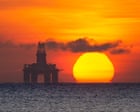
The Jackdaw gasfield in the North Sea will be given the go-ahead on Wednesday, in a move that signals the Labour government's commitment to the North Sea fossil fuel industry but threatens to trigger a row with climate campaigners and Labour MPs.
Energy Secretary Miatta Fahnbulleh and Chancellor John Healey will make the announcement from Aberdeen on Wednesday morning, after more than a year of deliberations over whether doing so would violate the UK's climate commitments.
The approval for drilling at one of the biggest undeveloped fields in the declining North Sea basin is a big boost for Britain's oil and gas industry — and especially for Shell and the Norwegian company Equinor, which operate it.
When fully operational, Jackdaw will account for 6% of North Sea gas production, making it one of the biggest gasfields not yet under production. Along with the Rosebank oilfield, its status had become totemic of the government's commitment to an industry facing heavy job losses as reserves decline and platforms become increasingly automated.
Climate campaigners have reacted with outrage. Tessa Khan, executive director of the anti-oil campaign group Uplift, said Jackdaw will provide around just 2% of the UK's gas demand for roughly 10 years, that it has been oversold, and that, being largely unmanned and operated remotely, it will not stop the overall decline in North Sea jobs.
Khan added that Labour's climate credibility is on the line, and that no new oil and gas fields are compatible with safe climate limits.
The field was first approved by the Conservative government in 2022, with ministers arguing it would help shield the UK from the volatility in the energy market caused by Russia's invasion of Ukraine.
Labour came to power in 2024 promising not to grant any new licences in the North Sea, not expecting to have to decide on either Jackdaw or Rosebank. However, both fields were cast into doubt last year by a landmark ruling that their environmental approval had been incorrectly granted; a judge ruled that regulators should have taken into account the carbon emissions generated by burning the oil and gas the fields will produce when deciding whether they would violate the UK's climate commitments.
Shell and Equinor resubmitted their application for environmental consent last September. Since then, Fahnbulleh and her predecessor, Ed Miliband, spent months deciding whether to use their ministerial power to block it.
Both Prime Minister Andy Burnham and his predecessor, Keir Starmer, have come under heavy pressure to allow the fields to go ahead, not least from US President Donald Trump, who urged both men to 'open up the North Sea'. Burnham signalled his sympathy earlier this summer, promising a 'pragmatic approach' and saying: 'There is a resource there. When people are struggling — you can't ignore that.' He told the Commons last week that he would take a pragmatic approach on oil and gas and set out the decisions shortly.
Multiple sources say Fahnbulleh has now decided not to block the field, allowing the regulator, the North Sea Transition Authority (NSTA), to give the go-ahead based on financial and logistical concerns. She will make the announcement alongside Healey and the NSTA's chief executive, Stuart Payne, on Wednesday, and they will argue that granting environmental approval does not breach Labour's manifesto commitment because it is not a new licence.
Fahnbulleh is understood not to have made a final decision on the larger Rosebank field, but energy department officials are looking at ways the tax proceeds from that project could go to green projects if it is approved. A decision is expected later in the year.
The Jackdaw announcement could boost Labour's position in the north-east of Scotland, where much of the industry is based and where unions have campaigned heavily for the permits. But it is likely to cause angst among some Labour MPs, especially those in seats where they face a challenge from the Green Party.
A poll by Savanta for the climate group E3G shows that nearly a third of voters say they would be less likely to vote Labour if it gives the go-ahead for more North Sea drilling — including almost exactly a third of those who voted Labour at the last election and around half of 18-24-year-olds. Ellie Mae O'Hagan, UK energy programme lead at E3G, said that after a summer of deadly heatwaves the public has made up its mind: more drilling is the wrong answer.
Officials say the Rosebank decision is likely to be the more sensitive one, partly because it will produce around seven times the CO2 emissions and partly because most of the oil produced there will be exported. In Khan's words, the defining test is Rosebank — and passing it means prioritising affordable bills, genuine industrial growth and a safe climate over oil profits, which means rejecting Rosebank.