Nato boosts Black Sea deployment as deadly Russian attacks on merchant ships escalate
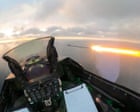
Nato is deploying additional military assets to the Black Sea after a recent deadly escalation of Russian attacks on merchant shipping, with five more vessels attacked on Tuesday. There is mounting anxiety that Russia's war on Ukraine is now reaching the alliance's borders.
Russia's military said it struck three cargo vessels in Ukraine's port of Reni and two other cargo vessels en route to Odesa. The targeting of vessels carrying grain and other agricultural cargoes from Ukraine's ports — central to the country's economy — has brought the conflict to Nato's doorstep.
A new high-risk designation used by the London shipping insurance market now covers all of the Black Sea except the territorial waters of Romania, Bulgaria and Turkey. With a sharply rising death toll among civilian seafarers, Black Sea routes have become the world's most dangerous.
Nato spokesperson Allison Hart said: 'Today, Nato ambassadors met in the North Atlantic Council to discuss security in the Black Sea. Nato has already strengthened our posture along the eastern flank, including with counter-drone capabilities. Nato will be sending additional assets to the region, including support for surveillance, reconnaissance, and forensics.'
The deployment will include maritime patrol aircraft, radar systems, drones and intelligence personnel. Concern is growing about the increasing overspill from Russia's war on Ukraine and the potential for further friction with Nato.
Alleged Russian attacks have increasingly edged into the territorial waters and exclusive economic zones of Bulgaria and Romania. Over the weekend, Romania deployed jets to shoot down two suspected Russian drones over its territory.
Romania's defence minister, Radu Miruță, said the drones were probably latest-generation Russian drones, flying at speeds similar to fighter jets. 'The ones from last night were flying at 450 km/h, which leads us to think they were Russian-made Geran-4 drones with a turboprop engine,' Miruță said. 'This is the first time we've shot down drones like these.'
Romania has recorded 35 unauthorised drone incursions so far this year, compared with nine in 2025. Romanian forces have downed six drones this year, compared with zero last year.
Last week, two chemical tankers were hit by drones near Romania's Black Sea coast. Both vessels were anchored near the Sulina canal, which links the Danube River to the Black Sea and is an export route for Ukraine.
At least five other cargo ships have been hit near the coasts of Romania and Bulgaria in the past two weeks, with 23 sailors reported dead or missing. Most of those incidents occurred outside Nato territorial waters.
Amid mounting concern, Bulgaria has asked Nato for the deployment of combat aircraft and anti-drone systems to its territory. On 18 October, France sent a maritime reconnaissance aircraft to Romania.
The maritime insurer and risk analyst Ambrey has said there is no end in sight to the threats to Black Sea cargo shipping, including grain and oil, and that insurance prices for passage through the waters have rocketed. Tomas Alexa, a senior analyst at Ambrey, said last week his company had noted a sharp increase in the tempo of attacks beginning in July, and that Russian forces are estimated to be responsible for 80% of them.
Alexa suggested the recent loss of life had been exacerbated by 'double tap' attacks involving aerial and surface drones, the latter often carrying up to half a tonne of explosive payloads, while smaller vessels that primarily use the Danube canal system have sunk rapidly. 'While attacks against merchant vessels in the Black Sea are not new, we are seeing an escalation both in terms of the number of attacks and in the geographical scope,' Alexa said.