A Third of Posts Vacant at Jessore's Seven Upazila Health Complexes as 50-Bed Hospitals Hold a Hundred Patients
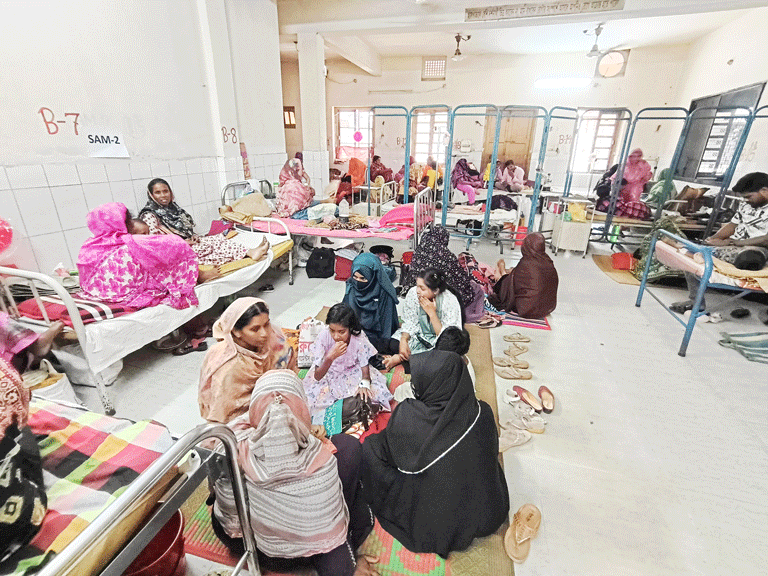
The shortage of doctors and health workers at Jessore's upazila health complexes has reached an alarming level. Across the district's seven upazila health complexes, nearly a third of all approved posts lie vacant, while patient pressure is almost double the number of beds. Hospital authorities are struggling every day with limited manpower.
An analysis of the staffing data shows that against a total of 1,398 approved posts at the seven health complexes, only 941 people are currently working. As many as 457 posts are vacant — about 32.7 percent of all approved posts.
The doctor shortage is even more severe. Against 287 approved doctor posts at the seven complexes, only 167 doctors are in service — meaning 120 doctor posts are empty. Added to this manpower gap are excessive patient pressure, a lack of necessary specialist doctors and inoperative equipment.
The picture of the crisis is stark: in some places an anesthesia doctor exists on paper but is not regularly available; in others an ultrasound machine sits idle because there is no doctor to operate it. Elsewhere a pathology department is open but has no pathologist, and X-ray and ultrasound machines lie out of order. As a result, patients are forced to travel to private clinics or the district town for essential tests and treatment.
At Chowgacha Upazila Health Complex, 90 to 100 patients are admitted daily against just 50 beds, and the authorities are struggling to serve them. Records show 25 doctors working against 43 approved posts, though Upazila Health and Family Planning Officer Md. Ahsanul Mizan Rumi puts the number of working doctors at 24.
Rumi said only caesarean operations are performed at the hospital. But the anesthesia doctor's post has been vacant for a long time, and although there is an ultrasound machine, there is no doctor to operate it. Against the hospital's 221 approved posts, 127 people are working, with 94 posts vacant.
A similar crisis exists at Manirampur Upazila Health Complex. There too, 90 to 100 patients are admitted against 50 beds. Only 26 doctors are working against 47 approved posts. Of the hospital's 247 approved posts, 169 are filled and 78 are vacant.
Manirampur's Upazila Health and Family Planning Officer Dr. Faiyaz Ahmed Faisal said the manpower shortage has become acute because of the excessive pressure of patients.
At Abhaynagar Upazila Health Complex, too, patients outnumber beds. The 50-bed hospital holds 60 to 70 admitted patients. Against 38 approved doctor posts, 24 doctors are working, and 110 people are in service against the hospital's total of 138 posts. Upazila Health and Family Planning Officer Dr. Md. Mizanur Rahman said more manpower is needed considering the patient pressure.
At Jhikargacha Upazila Health Complex, 29 doctors are working against 46 approved posts. Because of the manpower crisis, caesarean operations are performed only one day a week — on Thursdays.
Jhikargacha's Upazila Health and Family Planning Officer Dr. Md. Abdur Rashid said services have to be maintained amid the shortage. An anesthesia doctor is posted there but serves only three days a week in Jhikargacha, while also carrying additional responsibility at Chowgacha Upazila Health Complex. X-ray and ultrasound machines exist, but there is not enough manpower to run them properly.
This picture emerges from analysing the staffing data of the seven upazila health complexes — Chowgacha, Jhikargacha, Bagharpara, Abhaynagar, Sharsha, Manirampur and Keshabpur. The shortage of specialist doctors, combined with inoperative equipment, has created a major crisis in ensuring government healthcare at the upazila level.
Ordinary patients are suffering the most in this situation. For tests and complicated treatment they must pay extra at private clinics or travel to the distant district town. Those concerned believe that unless quick steps are taken to fill the vacant posts, this service crisis at the upazila level will only deepen.