Three of BIWTC's four idle vessels at Sadarghat to be converted into floating hospitals
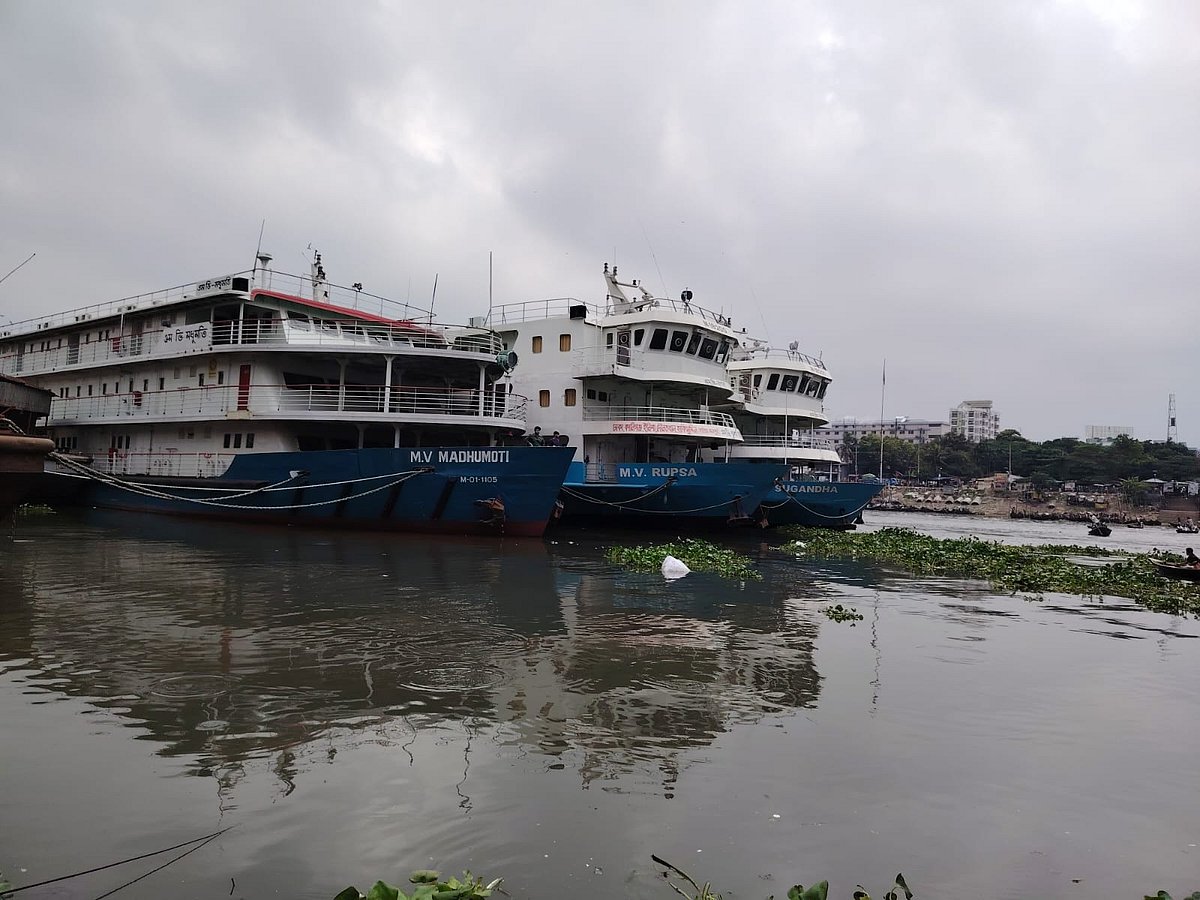
Two new passenger vessels bought for the Dhaka-Barisal river route have been lying idle for nine months at Badamtali ghat in Dhaka's Sadarghat. The government is now planning to convert three of the four idle vessels into floating hospitals.
MV Rupsa and MV Sugandha joined the fleet of the Bangladesh Inland Water Transport Corporation (BIWTC) last February. The two vessels were bought from Western Marine Shipyard Limited for 68 crore taka. But because of a shortage of passengers and mechanical faults, the vessels are not being used; instead of the hoped-for profit, BIWTC is incurring regular costs on them.
Two more BIWTC passenger vessels, MV Bangali and MV Madhumati, have also been lying idle and deteriorating at Badamtali ghat for a long time. They were bought from Western Marine Shipyard in 2014 and 2015 at a cost of 54 crore taka.
In total, the four vessels were bought for 122 crore taka during the previous Awami League government. Shipping ministry sources say the current government wants to put the idle vessels to alternative use to cut losses: three would be converted into floating hospitals, while the fourth would be kept for events of the shipping ministry and other government ministries.
On 17 November, a tripartite meeting on the use of the four vessels was held in the shipping ministry's meeting room at the Secretariat. Officials from the shipping ministry, the health ministry and BIWTC attended, and State Minister for Shipping Rajib Ahsan chaired the meeting.
The meeting discussed launching three floating hospitals to provide healthcare to people living in haor wetlands, island areas and char lands. One vessel would be made a specialised hospital for eye care, one for maternal and child health services, and one for orthopaedic surgery. Each vessel would also have medicine physicians alongside the stated outpatient services.
It was also discussed that, even when converted from passenger vessels into floating hospitals, the structures of the three vessels cannot be altered. Only one staircase could be converted into a ramp for patients, and rooms could be created by partitioning existing empty spaces as needed. Proper accommodation, food and sanitation must be arranged for the doctors and nurses engaged at the hospitals, a specific system must be kept for hospital waste management, and a minimal service fee will be charged to patients receiving care. The Directorate General of Health Services will prepare an estimated cost for equipment and related facilities as quickly as possible.
Asked about the plan, Shipping Secretary Ataur Rahman Khan said the vessels cannot lie idle day after day, and alternative use is being considered — in that case they could be used as floating hospitals to provide medical care in remote areas. He said: 'We can only provide the vessels. The doctors, nurses and the rest will come from the health ministry. Much will also depend on their goodwill. Which three vessels will be converted into hospitals has not yet been finalised.'
Shipping ministry sources say there are several challenges with the floating hospitals. Whether doctors and nurses will agree to go to remote areas, their accommodation and food, who will provide the manpower and who will pay their salaries and allowances all have to be settled. The vessels' fuel and maintenance costs must also be ensured, and the cost of conversion and the areas where the hospitals will operate have not yet been finalised.
BIWTC Chairman Abdul Bari Dani said the vessels are lying idle and efforts are under way to convert them into floating hospitals to provide healthcare to ordinary people in remote areas. He said that after the Padma Bridge opened, demand for the vessels fell, people travel more by road and income has dropped — which is why alternative use of the vessels is being considered.
The purchase history of the two newer vessels is also long. BIWTC signed a 68-crore-taka contract with Western Marine in 2015 to buy two vessels for the Dhaka-Barisal route. The vessels were due by 2018, but Western Marine could not deliver on time because of a financial crisis; after much correspondence, BIWTC finally received the two vessels on 23 February this year. Their earlier names were Bangatari and Bangamata; the current government renamed them MV Rupsa and MV Sugandha. BIWTC said a private firm operated the vessels for a few days, when faults including in the engines were found, and they were later repaired.
Visiting the Badamtali area of Sadarghat on 21 November, MV Rupsa and MV Sugandha were seen lying idle. On their third decks there are two types of passenger chairs, new furniture bought for dining tables, separate seating for VIP passengers, VIP cabins, first- and second-class cabins and deck facilities; the unused new furniture has gathered dust. MV Madhumati was also seen lying unused nearby, along with 10 water buses. Saber Hossain, who is in charge of looking after the vessels, said MV Bangali has been sent to a dockyard in Narayanganj for repair.
Those concerned say no feasibility study was done before MV Bangali and MV Madhumati were bought ten years ago, and no plan was made for what would happen to them once the Padma Bridge opened. A planning ministry report cited as reasons for the losses that the jetty at Badamtali is far from Sadarghat's main terminal, so passengers do not want to travel that far to board, and that ordinary passengers do not know much about the two vessels. After the Padma Bridge opened in 2022 and passengers dried up, the two vessels were laid up to cut losses.
Asked about this, BIWTC Director (Commerce) SM Ashikuzzaman said the two new vessels were due in 2018, but Western Marine could not hand them over on time because of its financial crisis. By the time the Padma Bridge opened, construction of the two vessels had advanced a long way, so no alternative could be considered.