Trump blames Iran war for midterm losses, faces three difficult paths ahead
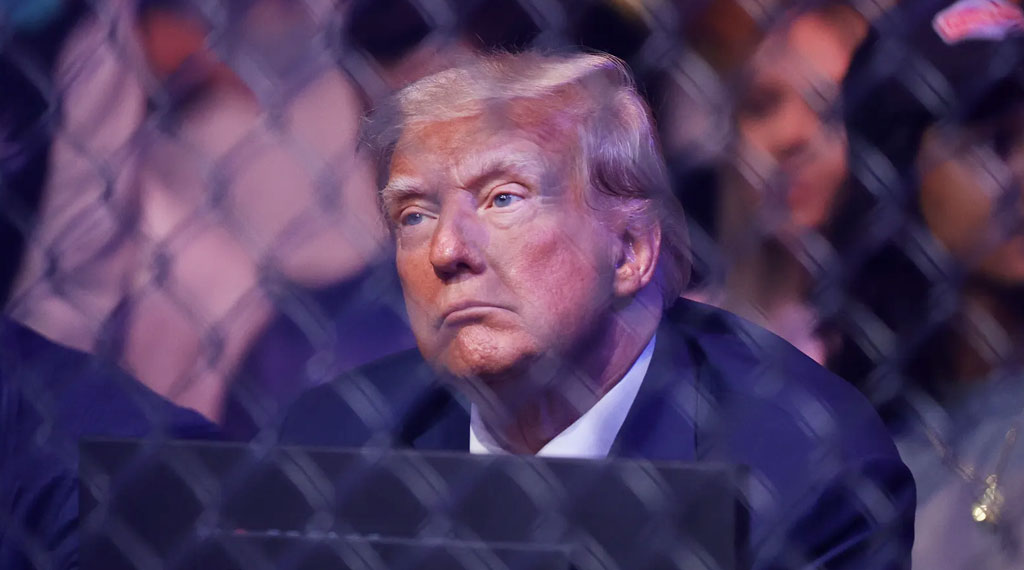
US President Donald Trump has acknowledged that the Iran war caused major political damage to Republicans in the midterm elections. He must now decide whether to accept the losses and move towards a settlement, or hold a hard line and resume bombing Iran.
The first option before Trump is to attack Iran again. But starting the war again could make it even more unpopular and risks keeping fuel prices at high levels. There is also no guarantee that a renewed military campaign would produce a better military result than before.
The second option is to reach a settlement through negotiations. But if Iranian officials refuse to make concessions, or treat Trump's political setback in the election as weakness and raise tougher demands, reaching a settlement will become difficult for him.
The third option, in the words of Trump's aides, is to keep Iran 'strangled' — maintaining the current situation with a naval blockade and tough economic sanctions to gradually cripple the Iranian government, while testing how interested Tehran is in a settlement. Progress under this strategy, however, could take months to become visible.
A former Trump adviser told the US outlet Axios that losing the midterms is one thing, but Trump does not want to be seen as defeated twice in a row. That is why even his closest aides are unsure what his next step will be.
On Wednesday morning local time, Vice President JD Vance directly blamed the Iran war for the Republicans' midterm disaster in a statement. Writing on X, Vance said, 'We lost because of the war. The president himself said this last night.' He also cited the US-Israel relationship as a major political liability for Republicans.
Speaking to reporters on Wednesday, Trump said Vance's analysis was 'largely true', because the war had pushed fuel prices up. But he said he would make the same decision again if necessary, adding, 'We had no other option. Iran cannot be allowed to obtain a nuclear weapon.' Asked when he would end the war, he said, 'When I want to. But the job has to be finished properly.'
In recent months Vance has led the faction within Trump's inner circle advising a settlement with Iran to end the war. Sources said that in private discussions Vance criticised Israeli Prime Minister Benjamin Netanyahu's position on Iran. According to the sources, Vance had warned that the war was highly unpopular and could cause Republicans to lose the election.
US officials said the US military is finishing preparations to possibly resume major operations in Iran, sending more military equipment and capabilities to the Middle East. At the same time, Qatari mediators are trying to get the United States and Iran to agree to a draft agreement, to prevent a renewed war and, if possible, restart direct talks within the next few days.
Iranian officials have expressed delight at Trump's political defeat in the US election. Mohsen Rezaei, secretary of Iran's Supreme National Security Council, wrote on X that the Iranian nation had strategically defeated Trump on the battlefield and in the Strait of Hormuz, and given him a political defeat in Washington.
Ali Vaez, deputy director of the Middle East and North Africa programme at the think tank International Crisis Group, told Axios that Tehran's biggest temptation could be to mistake Trump's political weakness for military weakness and raise its demands too far; the wise course would be to secure a deal while Washington is still interested in a settlement.
CIA Director John Ratcliffe, Treasury Secretary Scott Bessent and other Trump advisers want the naval blockade and economic pressure campaign to continue for some time longer, to increase pressure on Iran and steadily corner the country. In the midterms, Democrats won control of both the House of Representatives and the Senate.