Youth protests sweep Italy: clashes in Rome, Milan and Turin, nine arrested, Bangladeshi expatriates concerned
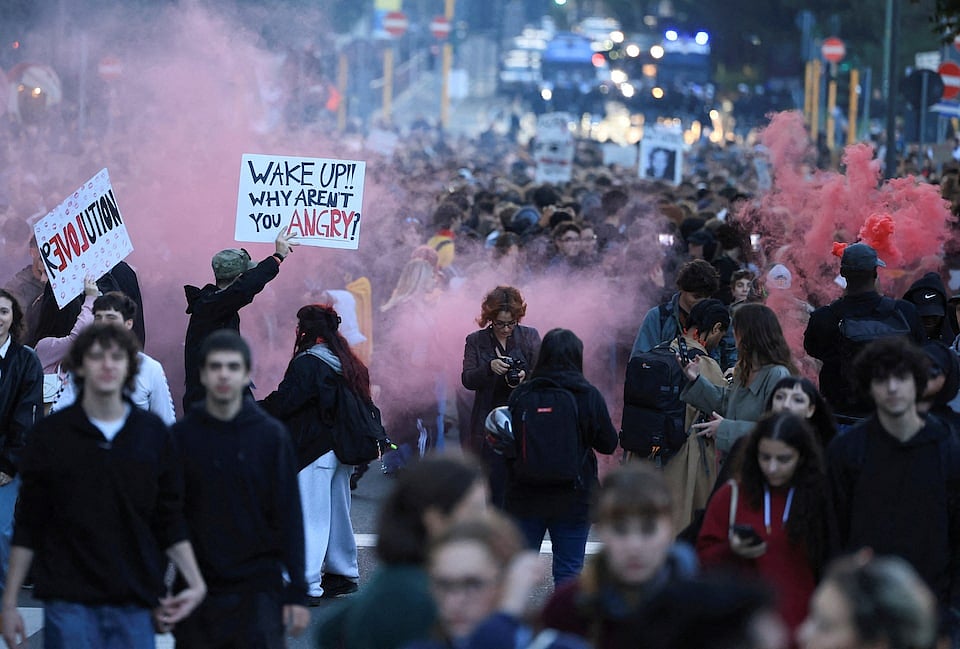
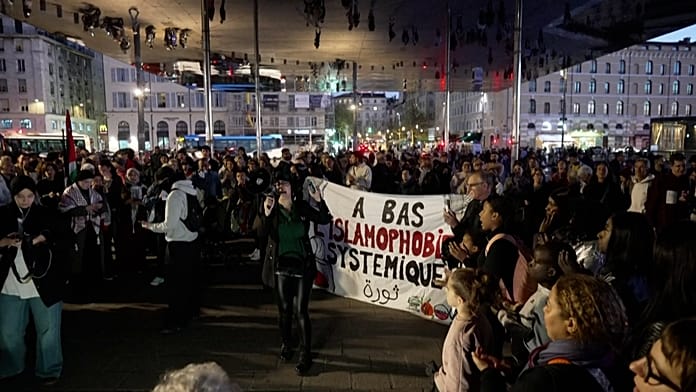
Protests have been held across Italian cities over the rising cost of living, a housing crisis, the poor state of education and various government policies. After violent protests on 17 October, fresh demonstrations took place on Saturday 24 October in the capital Rome, Milan, Turin, Bologna, Florence and other cities. There were clashes with police, and tear gas and water cannon were used, though there was no widespread looting like the previous week.
According to Italy's public security department, the identities of 4,292 people were checked across the country in connection with protests, violence and looting. A total of 371 people were taken to police offices and nine were arrested, while charges were brought against 87 people. Among those taken to police offices, 110 were minors and 69 were foreign nationals.
In mid-October, a movement called 'Movimento 17 Ottobre', or the 17 October Movement, began campaigning on social media. Young people were called to join protests through TikTok, Instagram and various online chat groups. The protesters' main complaint is that while the cost of daily essentials, fuel and rent has risen in Italy, ordinary people's incomes have not risen at the same pace.
In big cities such as Milan, Rome and Bologna, housing costs have become a major problem for students and young workers. Not all the protests are part of the same movement, however: labour organisations, students and anti-war groups are also holding separate programmes. Part of the protesters have demanded increased public investment in education and healthcare and cuts to military spending.
Sabrina Brizzola, national coordinator of the university students' organisation Unione degli Universitari, recently told a rally that students demand safe educational institutions, dignified employment, public healthcare and social justice. Julius Fintelmann, co-founder of the European Correspondent, told CNN that long-standing discontent is turning into protests out of a feeling that European politics cannot meet the new generation's expectations, and that fears that artificial intelligence will make entry-level jobs more uncertain are adding to young people's anxiety.
In the capital Rome, part of the protesters entered the historic Colosseum. Clashes followed bottle-throwing at police near the Quirinale presidential palace in the city centre, and police used water cannon to bring the situation under control.
In Turin in northern Italy, about four thousand people joined a protest against militarisation. Tear gas was used during attempts to break through police lines and clashes there; two people were arrested and charges were brought against 25. In Bologna, part of the protesters blocked roads and set fire to rubbish bins, and the local emergency health service said at least 19 protesters were injured there.
In Florence, tension rose as part of the protesters advanced towards an area of luxury shops. In Milan, by contrast, several thousand students and young people protested in comparatively calm conditions, and local media said the number of participants reached about 10,000 in the evening as marches converged. Protests also took place in Naples, Padua, Bari and several other cities, with no reports of major violence.
Milan police have detained 30-year-old Youssef Siher over alleged involvement in the social-media-based activities of the 17 October Movement. Italian newspaper Il Giorno reported that Siher, an Italian citizen of Moroccan origin, is a journalist and researcher who studied at the University of Milan. Investigators believe he played an important role in running the movement's Instagram and Telegram-based campaigning, and he is being investigated on several charges including incitement to crime. He was taken to Milan's San Vittore prison, and on 26 October a court reviewing the legality of his detention sent him to prison. His wife, 32-year-old Sajia Hammud, of Lebanese origin, is also under investigation on the same allegations.
Italian Prime Minister Giorgia Meloni stressed ensuring citizens' safety during the protests. After the 24 October events, she thanked law enforcement personnel and said the right to protest peacefully must be ensured just as citizens' right to live safely must be protected. Interior Minister Matteo Piantedosi said strict action would be taken against those involved in violent acts.
Fearing violence, several shops in Milan closed early on 24 October. In the north-eastern city of Trieste, some businesses protected their shop glass with wooden coverings and a few shops were kept temporarily closed. A significant share of Bangladeshis living in Italy are involved in fruit shops, minimarkets, restaurants and other small businesses, especially in commercial areas of big cities, so effects such as keeping shops closed and reduced customer movement are a cause of concern for them.