Lula Wins Fourth Term in Brazil as Defeated Flavio Bolsonaro Demands Annulment
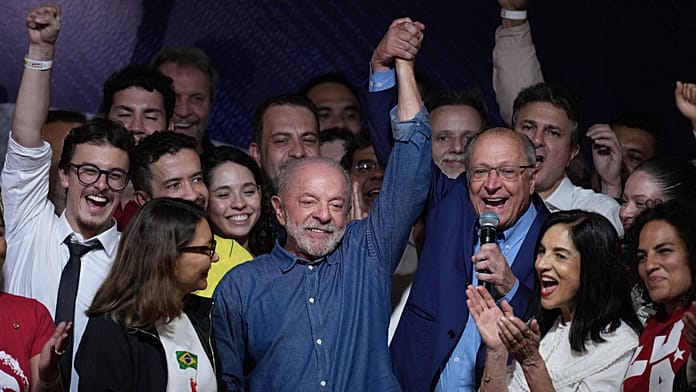
Leftist leader Luiz Inacio Lula da Silva has defeated right-wing Senator Flavio Bolsonaro in the run-off of Brazil’s presidential election, winning a fourth term as president. Flavio Bolsonaro, however, refused to concede and announced he would ask for the election results to be annulled.
Brazil’s Supreme Electoral Court declared Lula the winner shortly after 9 p.m. local time on Sunday (25 October), after the second round of voting ended. With about 99 percent of votes counted, Lula had won more than 51 percent; another count put his share at 51.8 percent, a lead of nearly 4.4 million votes over his rival. Flavio Bolsonaro received about 48 percent.
In the first round on 4 October, Flavio Bolsonaro had led with 47 percent against Lula’s 45 percent, and because no candidate passed 50 percent, a run-off was held. Lula is the first presidential candidate in modern Brazil to lose the first round and win the second; no candidate who lost the first round had gone on to win the run-off since 1989, the first direct election after the end of military rule.
Controversy centred on a last-minute decision to extend voting by two hours. Lula himself had requested the extension after complaining that buses had been pulled from circulation in various cities, barring citizens from voting. Flavio Bolsonaro had also requested an extension in some regions because of heavy rain, but he described the decision as “unacceptable” and a “dirty trick”. In a brief speech in Brasilia he said: “It is impossible to recognise the results. I am going to request the annulment of these elections.”
Flavio Bolsonaro is the son of former far-right president Jair Bolsonaro, who is serving a 27-year jail term for attempting a coup after his loss to Lula in the 2022 election.
Lula’s campaign emphasised promises to cut the cost of living and address ordinary people’s economic hardship, and he also raised the possibility of shorter working hours and free weekend public transport. After the first-round defeat, the left held massive rallies under the slogan “Never Again Bolsonaro” and revamped its social media strategy. Abstention fell from 21 percent in the first round to 19 percent in the run-off.
In his first comments after the win, Lula said: “People went to vote because we managed to convince them that voting was very important for ensuring democracy in the country.” His campaign leaned heavily on sovereignty in the face of commercial and diplomatic pressure from Donald Trump’s United States; addressing supporters, he said: “Either the homeland remains free, or we die for Brazil. This country will not accept being anyone’s backyard.”
After the result was confirmed, fireworks and vuvuzelas rang out in Rio de Janeiro, while thousands of people dressed in red, the colour of Lula’s Workers’ Party, streamed into the streets of Sao Paulo to celebrate. Cars sounded their horns in Rio, and a woman dressed in red shouted “You lost! Cry harder!” at Bolsonaro supporters in yellow and green.
Leaders around the world congratulated Lula. Mexico’s President Claudia Sheinbaum wrote on X: “Long live democracy, the people of Brazil won.” Canada’s Prime Minister Mark Carney credited Lula with advancing Canada-Brazil relations and spoke of new commercial prospects, environmental protection and prosperity for both peoples. US Senator Bernie Sanders congratulated Lula on his “extraordinary re-election victory”, saying he has stood up for workers and democracy.
By contrast, Donald Trump Jr, son of US President Donald Trump, criticised the two-hour voting extension. Congressman Ro Khanna wrote on X that people across the world are fighting back against extremism and that with Lula in Brazil they had won, adding that President Trump must respect the results and not undermine Brazil’s elections. New York City Mayor Zohran Mamdani wrote: “The people united will never be defeated!” Cuba’s President Miguel Diaz-Canel described Lula’s win as “historic”.
Lula rose from poverty to become president in 2003 and was re-elected in 2006. After spending more than 18 months in jail on corruption charges that were later annulled on procedural grounds, he returned to power by winning the 2022 election. In his third term, inflation and unemployment fell and millions were lifted out of hunger, but many voters were gloomy about the high cost of living and crime.
Lula is due to be sworn in on 5 January 2027. He begins his fourth term, however, with a major challenge: almost half the nation voted against him, so he must govern a divided Brazil.