
Cape Town's College of Magic: Africa's Only Magic School Turns Ordinary Children into Confident Young Magicians
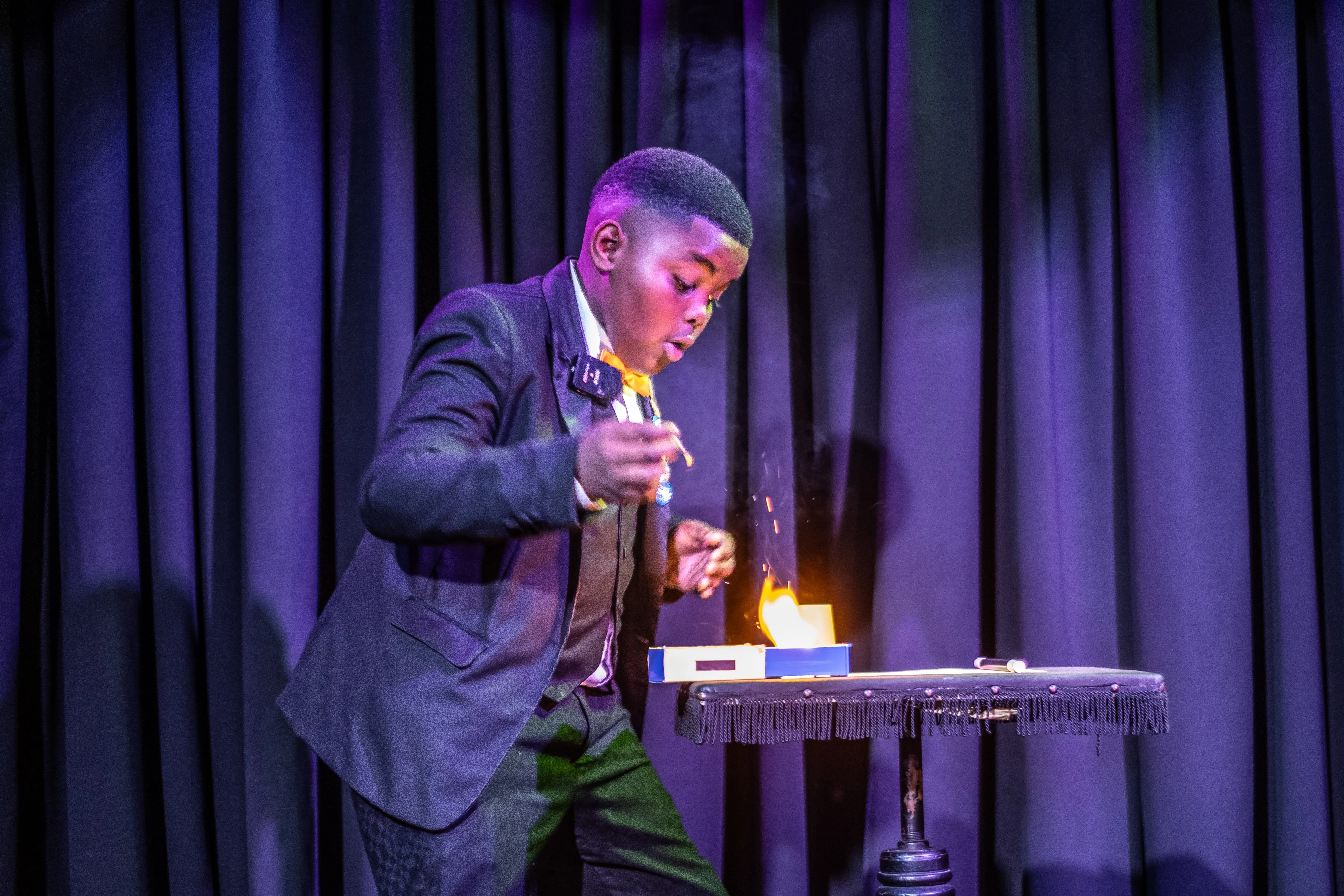
Lubelo Mthenjana, 11, stands alone on a dark stage dressed in a sharp black three-piece suit and a dapper yellow bow tie. As his name is announced, he opens his arms wide, flashes a bright smile and declares: 'Hello everyone! My name is Lubelo Mthenjana, and I will be performing for you … some magic!'
At the annual junior magic contest of the College of Magic in Cape Town, South Africa, the audience of about 30 children and parents was spellbound. They laughed as he made a string of paper clips vanish into a plastic cup and gasped as the clips reappeared inside a matchbox. Then came his best trick: conjuring sweets out of thin air and tossing them into the crowd, to thunderous applause, while his mother beamed with pride.
On that cloudy Saturday morning the college was buzzing with energy as dozens of students competed in the contest. Children in top hats, crisp white shirts and ties dashed up and down a staircase decorated with brightly coloured posters, while display cabinets on every floor overflowed with magic wands, sparkly hats, silk scarves, handcuffs, dice, Rubik's Cubes, toys, photographs and trophies won in competitions all over the world.
Outside the old red-brick Victorian mansion, framed by palm trees, two teenage boys zipped around the car park on unicycles, while on the porch a handful of kids practised juggling with balls, clubs and diabolos flying into the air.
Tucked away in a peaceful suburb, this extraordinary school is a real-world Hogwarts: Africa's only school for youthful stage magicians and illusionists. Every Saturday morning, about 190 starry-eyed students aged 10 to 18 attend classes in everything from puppetry, mime and clowning to juggling, card tricks, illusions, mentalism, stage magic, theatre production and escapology.
In founder David Gore's words, these are 'all the skills that will make a good magician.' Many of the students come from marginalised communities, and alongside magic they learn to face the world with a confident, creative and resilient mindset.
In 1980, Gore was studying law and paying his way by performing at private magic shows when he and a friend came up with the idea of starting a magic school.
'We walked into our local newspaper house with our top hats and tails, told our story about how we were starting the College of Magic, did magic for the journalists in the newsroom, and they published an article,' he recalls. 'From that article, we had 34 young people who started attending formal weekly classes studying magic.'
At the time, South Africa was still in the grip of apartheid, a brutal system of racial segregation that dictated almost every aspect of daily life. State schools were strictly segregated; students of different races could not even share park benches, some building entrances or the same public transport. Yet the College of Magic was multiracial from day one.
'When we started out, our organization was illegal,' says Gore, referring to its no-segregation policy. 'This was an opportunity for young people from all backgrounds to come together around a common interest in magic, to learn about each other and understand each other.'
Nearly 50 years later, the school continues to stand out in a city still deeply divided along racial and economic lines. 'Many of our young people remain siloed in their socioeconomic groups, very often along either language or racial lines,' Gore explains. 'Some arrive in very fancy cars, others have taken an hour in a collective taxi to get here. But when they're here, they work with the same equipment, the same classes, the same stages and get the same food.'
Sibabalwe Sibaj, 17, juggles while riding a unicycle, and young Lubelo's fire trick entrances audiences. In the decades since its founding, the college has trained thousands of magicians, illusionists and performers.
All told, the College of Magic does more than teach tricks — in a divided society, it brings children onto one stage and shapes them into confident, creative people, a rare example of what a single school can do.

