After an Incident-Free Durga Festival, the Talk Turns to Harmony: Calls for the Joy to Last All Year, Not Just the Festival Days
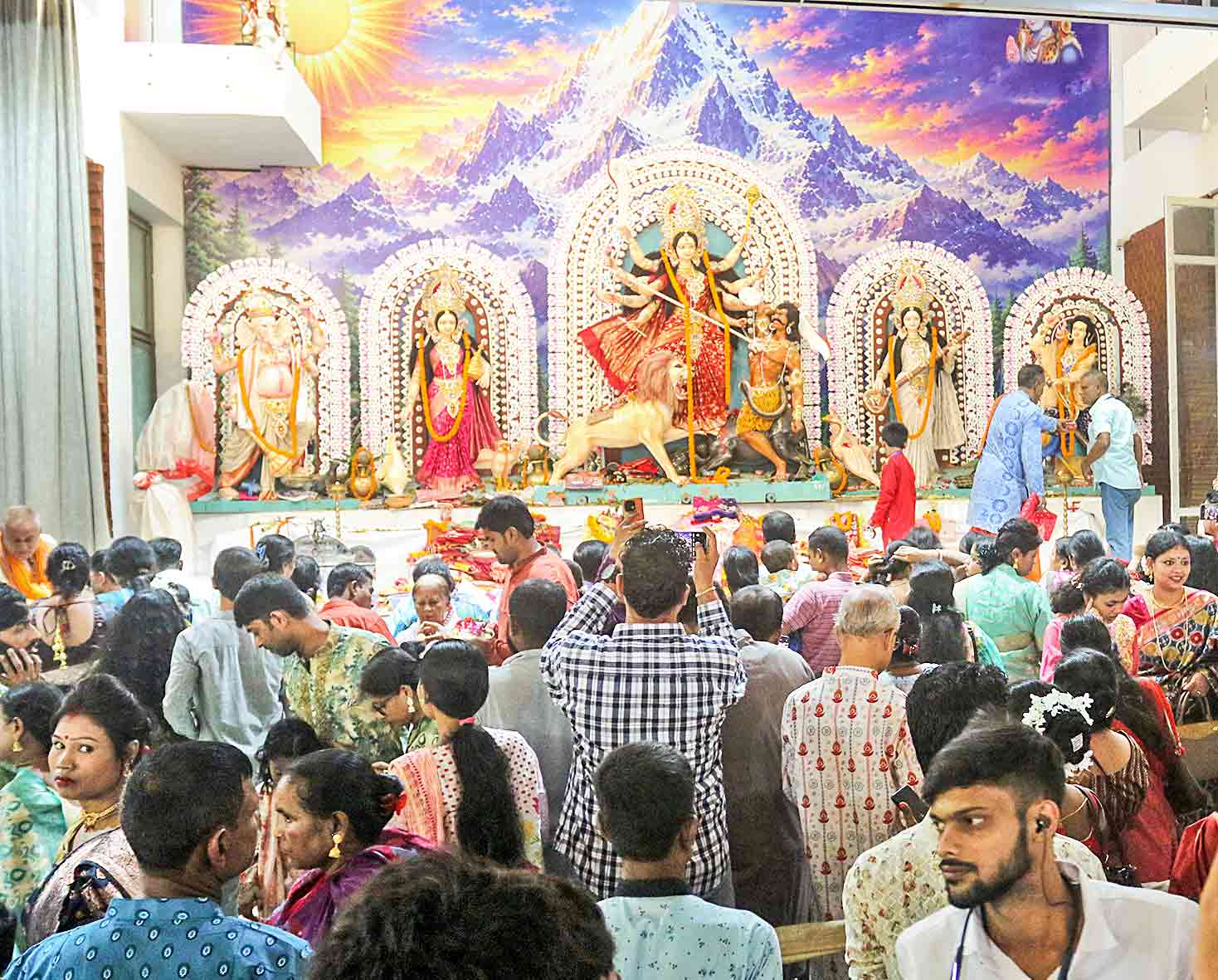
This year's Sharodiya Durga festival ended on 21 October with the immersion of idols on Bijoya Dashami. The festival is over, but video clips of the joy at the puja pavilions, the beat of the dhak, the lights, the arati, the cultural programmes and the moments of immersion are still circulating through social media newsfeeds.
These scenes are not merely the picture of one religious community's joy; discussion of this year's festival has framed them as a reflection of the beauty of Bangladesh's plural society and of mutual harmony.
One notable feature of this year's festival was that no major untoward incident occurred around the puja. Celebrating in a festive atmosphere is reassuring. At the same time, it has raised an important question: is such a safe and joyful environment only for a few festival days, or is it every citizen's right throughout the year?
In a democratic state, ensuring an environment in which religious festivals can be celebrated without hindrance is one of the government's foremost duties. On that measure, the government's role in maintaining security and harmony during this year's festival is being assessed positively. Concerns over security among religious minority communities have surfaced in discussion at various times; creating an atmosphere of relief and joy during the festival days is therefore seen as significant.
To make that success permanent, however, discussion has also stressed that, alongside festival-centred security, an effective year-round role is needed to protect the lives, property, places of worship and civic rights of religious minorities.
The festival also carries significance in political terms. After the BNP came to power in the most recent election, held in the Awami League's absence, there has been much discussion about the political position and expectations of a large part of the Hindu community. Whatever party citizens support in a free and participatory election, their expectation of an elected government is security, dignity and equal rights. Fulfilling that expectation is part of both the government's political goodwill and its democratic duty.
Another feature stood out this year. Many public representatives at various levels, alongside non-communal speeches, attended puja pavilions in person, exchanged greetings with worshippers and shared in their joy. The spontaneous presence of many young Muslim men and women was also noticeable.
That presence was not mere courtesy; it carried a message of mutual trust and social cohesion. When people cross the boundary of religious identity to value human relationships by sharing in another's religious festival, society's real strength is revealed, it is argued.
The much-used phrase “religion is one's own, the festival is everyone's” gained fresh significance at this year's festival. But its meaning is not limited to joining or greeting another faith's festival. Its underlying philosophy is that while religious belief is a personal matter, the joy of a festival, humanity and social harmony are open to all.
Against this picture of harmony, discussion also recalled another reality of society. Using religious emotion to spread communal hatred, incitement against other communities or attempts to create social unrest are not new in this country. Exploiting people's reverence for religious feeling for political gain has been described as a dangerous tendency for society.
The refusal of permission to hold waz mahfils during the puja period has also been discussed. The main considerations there, it is argued, should be public safety, law and order, and preserving the festival's normal atmosphere. Not a blanket ban on any religious gathering, but equal policy for people of all faiths, impartial application of the law and effective action against inciting speech should be the state's ideal, the discussion suggested.
In the end, the point being made is that while the immersion on Bijoya Dashami formally closed the festival, the practice of the harmony, tolerance and humanity it teaches should not stop. The festival's pictures will one day disappear from newsfeeds; what will remain is the real test of people's behaviour, political decisions and social values. Passing that test is the responsibility of the government, political parties, religious leadership and ordinary citizens alike.