Trump Says US Gave Russia Nothing to Free Hubbard, but Sanctions Waiver Draws Questions Even from His Own Party
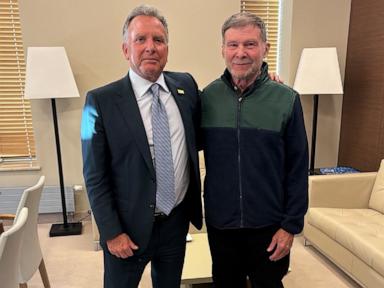
President Donald Trump claims the United States "gave nothing in exchange" for Russia's release of American citizen Stephen Hubbard. But the reality is more complicated, analysts and critics say, because as Hubbard was freed, the Trump administration took several steps seen as highly advantageous to Russia.
Hubbard is a retired teacher. He was captured by Russian forces in Ukraine and accused of acting as a mercenary for the country. The State Department determined in January 2025 that Hubbard was wrongfully detained, declaring that the allegations against him were fabricated.
At the top of a meeting on Wednesday in St. Petersburg with Trump's Special Envoy Steve Witkoff, Russian leader Vladimir Putin announced he would release Hubbard. Witkoff responded by publicly praising Putin, even calling him a "humanitarian" — praise that has drawn questions, since by the US government's own account Putin had jailed an American on false charges.
After Hubbard was freed, Trump indicated he had taken a softer approach toward the Kremlin in order to secure the release. He said his controversial decision to waive some new Russia-related sanctions that were set to take effect this week was made in part because he thought imposing them would derail the negotiations.
During a roundtable event at the White House on Wednesday, Trump said he was in the midst of getting Stephen out of Russia. In his words, if he had done what some wanted him to do, Hubbard would not be coming out and would have been in there for another 20 years. So, he said, the last thing he was going to do was break up the negotiations.
The president extolled the agreement, asserting Hubbard's return had not come at a price. He said the past administration gave massive amounts of money and other things, adding that you cannot do that, and when you do, the problem is greatly exacerbated.
In September 2023, the Biden administration facilitated the release of $6 billion in frozen Iranian assets in exchange for the release of five Americans detained by Tehran. The money was moved into a restricted account in Qatar intended to ensure Iran could only spend the funds on humanitarian goods. But the US froze the assets again after the 7 October terror attack on Israel, before any of the money was spent.
Kurt Volker, a former US ambassador to NATO and US special representative for Ukraine negotiations during Trump's first term, said the circumstances surrounding Hubbard's release perpetuate a pattern — encouraging Moscow to take more Americans captive in order to gain political leverage over Washington. In his words, Russia has been playing this game for years, and of course they will take more hostages.
Volker described sanctions relief as just another sort of payoff, like getting intelligence officers released or the exchange of convicted arms dealer Viktor Bout for WNBA player Brittney Griner in 2022.
Much of the critics' objection centres on the decision to waive sanctions. Critics of the president's decision to push off the majority of the sanctions and tariffs in the Lindsey O. Graham Sanctioning Russia and Iran Act of 2026 — passed by Congress with broad bipartisan support and signed into law by Trump last month — said it provided Moscow with a significant financial lifeline. Analysts project the sanctions in the law could cost Russia billions in energy revenue if fully implemented. The provisions in the legislation named for the late senator aimed to weaken Russia's ability to fund its war against Ukraine by cutting billions from its export revenue.
Following Hubbard's release, Trump claimed some opponents of his decision to push off the penalties for at least 60 days had called him to apologise. But even some Republicans appear to still be harbouring misgivings about the administration's approach to Putin.
Republican Senator Jodi Ernst posted to X on Wednesday that Vladimir Putin is not our friend. His relentless attacks on innocent civilians in Ukraine show his total disregard for human life, she wrote, adding that appeasement will not end this war, but pressure will.
Earlier this month, the administration also eased some preexisting sanctions to facilitate a deal to supply Russian diesel to US and global markets, issuing a licence authorising transactions related to its sale and delivery through April 2027. A bipartisan group of senators protested the agreement, writing in a letter to the president that the revenue the Kremlin receives will undoubtedly finance its desired war of attrition against Ukraine.
Volker said Trump wanted to grant sanctions relief anyway — to claim he is doing something about high diesel prices in the US. In his words, the release of Hubbard now gives the president the opportunity to say this was for a higher cause.
Trump's wavering support for Kyiv has also been described by many as a gift to Putin. The president has significantly ramped up pressure on Ukraine to halt strikes on Russian energy targets and reach a broader truce with Moscow, declaring that Ukrainian President Volodymyr Zelenskyy should have made a deal a long time ago.
As Trump has grown more vocal in his dissatisfaction with Kyiv, Ukrainian officials say the country's military has been grappling with speed restrictions on Starshield, SpaceX's military-grade satellite network. According to the Institute for the Study of War, these restrictions have significantly degraded Ukraine's intermediate-range strike campaign targeting primarily Russian logistics across the frontline.
SpaceX founder Elon Musk has suggested Trump is the only one who could have authorised the slowdown, while the president and members of the administration have denied issuing directives related to Starshield and maintain the company has the authority to enforce its own terms of service.
Republican Senator John Cornyn said he does not believe Elon Musk would do this without at least the acquiescence of the White House. He called it frankly shameful, saying the US should be supporting the victim, not the aggressor.
All told, while Hubbard's release is welcome news, the debate over the bargaining behind it has not subsided. Trump insists no price was paid, while critics ask whether sanctions relief and a softer posture were exactly that price. The argument looks set to remain active in Washington politics in the days ahead.