Third Terminal Deal Stuck on Four Conditions: CAAB Awaits Government Decision
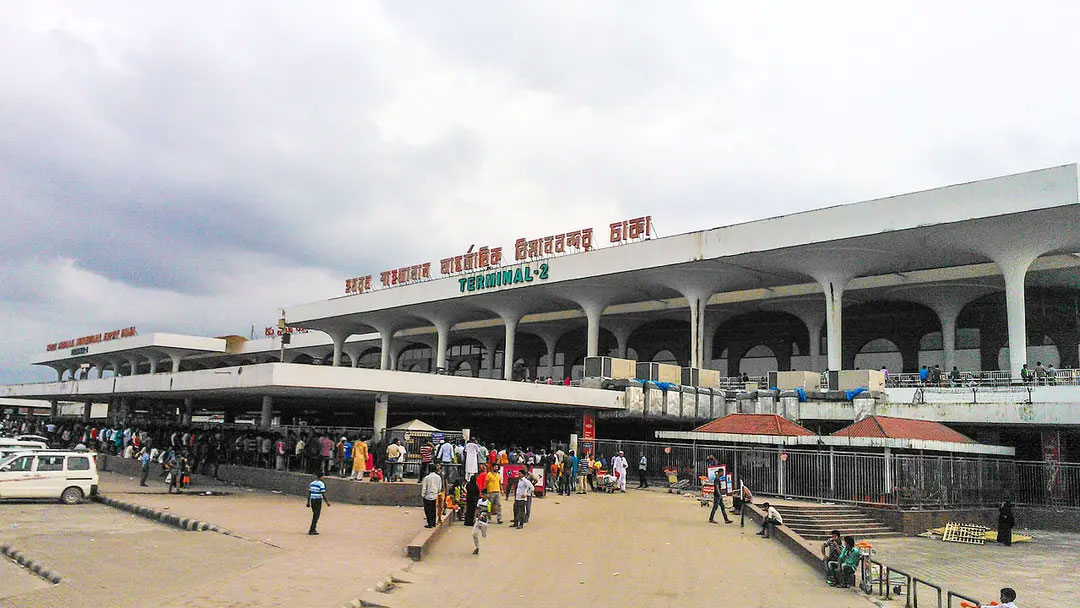
New conditions set by a Japanese consortium on four issues, including revenue sharing, have created complications in the contract to operate the third terminal of Dhaka's Hazrat Shahjalal International Airport. Disagreement over the four conditions has stalled the final contract for operating the third terminal. The Civil Aviation Authority of Bangladesh (CAAB) is now awaiting a high-level government decision to resolve the issues.
A senior CAAB official involved with the project, speaking on condition of anonymity, said discussions with the Japanese consortium on operating the third terminal have been completed. However, four new conditions have come up, and a government decision is needed on them. A letter has been sent to the ministry concerned informing it of the matter.
According to sources involved, CAAB has concluded negotiations with the Japanese consortium on taking responsibility for the operation and maintenance of the third terminal. But neither side could agree on four conditions that emerged at the final stage of the talks. CAAB has written to the Ministry of Civil Aviation and Tourism this week stating its inability to accept the conditions. It now awaits the government's decision; only then does CAAB want to take the next steps to finalise the contract.
The project to build Shahjalal's third terminal was taken up in 2017. Construction began on 28 December 2019 at an estimated cost of Tk 21,398 crore. The Bangladesh government provided Tk 5,000 crore of the project funding; the rest came from a loan from the Japan International Cooperation Agency (JICA).
On 8 September, after inspecting the third terminal, Civil Aviation and Tourism Minister M Rashiduzzaman Millat said formal operations at the third terminal would begin on 16 December. However, it may take until May next year for the terminal to become fully operational. He also said Bangladesh would receive 27 percent of the revenue earned from operating the terminal, while Biman Bangladesh Airlines would carry out 50 percent of the ground handling duties.
But the first and biggest complication in the contract has arisen over this very revenue sharing. Under the pre-agreed terms, Bangladesh is to receive 27 percent of the revenue. The Japanese consortium, however, has proposed paying 13.5 percent for the eight-month interim period between operational readiness and the start of activities.
If this proposal is accepted, the government's revenue income in those eight months would fall significantly compared to the predetermined rate. However, a detailed calculation is needed to determine how much revenue might be collected in this period and how large the government's financial loss would be at the proposed rate. CAAB believes that since revenue-sharing terms are crucial in a long-term contract such as terminal operation, the financial impact and justification of reducing the revenue share — even temporarily — must be examined before accepting the proposal.
The second major complication concerns the ground handling activities of Biman Bangladesh Airlines. Under the Japanese consortium's condition, even if partial responsibility for operating the third terminal goes to the foreign partners, Biman must bear the overall responsibility and risk of ground handling. At the same time, there is a demand to ensure Biman's share of the income from these activities.
As a result of this condition, although the responsibility for terminal operation and the burden of ground handling would rest with different organisations, complications could arise over who bears the operational risk. Those involved say it needs to be clarified how Biman's financial liability, possible losses and revenue distribution would be coordinated.
The third dispute concerns the country's existing laws and legal protection. According to sources involved, the Japanese side has sought special legal benefits, immunity or exemptions. Their position is that if the Bangladesh government in future enacts any general law for foreign investors or international organisations, or changes existing laws, those should not apply to them.
Bangladesh's position, on the other hand, is that if the government enacts a general law for foreign investors or international organisations, or changes existing laws, it will apply to the organisations concerned as well. Bangladesh does not agree to giving any organisation special benefits outside the country's existing laws and general legal changes.
The fourth dispute is over the time limit for liability to identify and rectify construction or other defects in the third terminal. Bangladesh wants to set this period — known as the Defect Liability Period (DLP) — at 9 months; the Japanese side has demanded it be extended to 12 months. According to sources involved, although there had earlier been discussion of keeping the liability period for equipment at six months, the demand has now risen to 12 months. As a result, a clear understanding is also needed on defect identification, rectification, liability for equipment, and who will bear the related costs.
However, Kazi Wahidul Alam, a former member of the board of directors of Biman Bangladesh Airlines, said it is essential to review the financial aspects of the contract thoroughly in the country's interest. Because no alternative arrangement was kept from the start, CAAB has fallen into a weak position in bargaining, and the foreign side is setting one new condition after another. If these conditions are accepted, new demands may come in future as well. Therefore, every condition should be examined and alternative arrangements ensured before finalising the contract.
All in all, although formal operations were announced to begin on 16 December, this deadlock over four conditions has pushed the third terminal's operation contract into uncertainty. CAAB is now looking to a high-level government decision — and the schedule for finalising the contract depends on that decision.