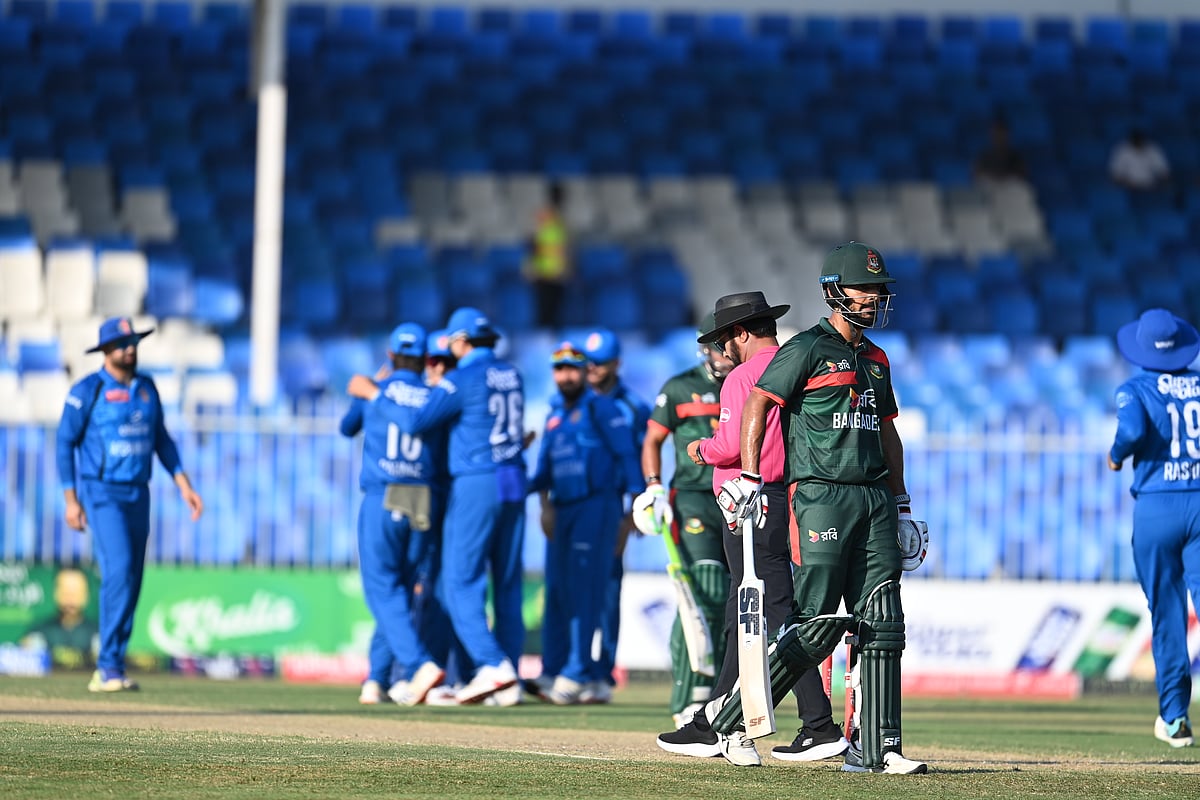
Bangladesh Crash Out of Tri-Series After Seven-Wicket Loss to Afghanistan in Sharjah Batting Collapse
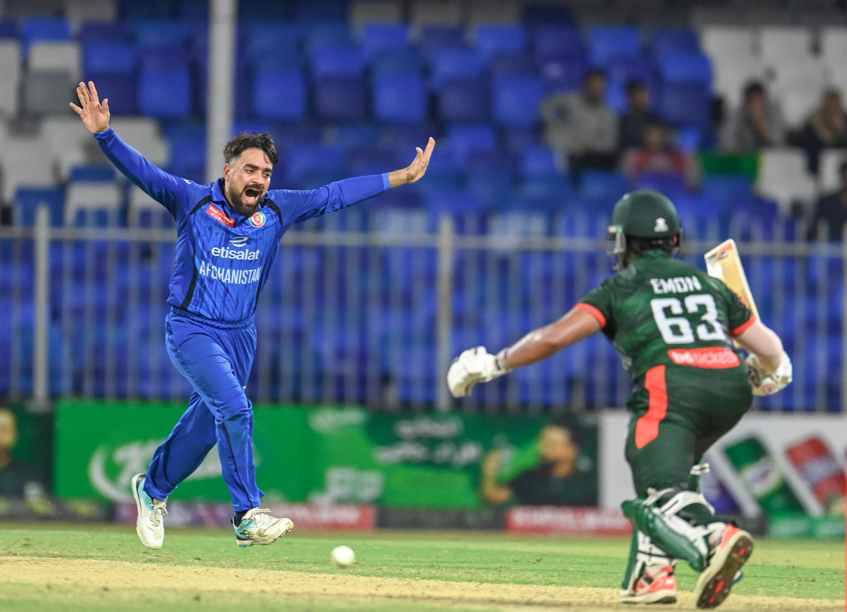
In a must-win match, Bangladesh were bowled out for just 160 instead of posting a big score. Afghanistan chased that target down with 87 balls to spare, winning by seven wickets in Sharjah and knocking Bangladesh out of the tri-nation ODI tournament. Afghanistan will face Zimbabwe in Friday's final.
Bangladesh had already been pushed to the edge after losing the series opener to Zimbabwe. To reach the final from there, they needed not just to beat Afghanistan but to win by 41 runs, so that the net run rate would keep them second in the points table. Batting first, Bangladesh never got close to that equation.
After being bowled out for 160, Bangladesh in fact needed to restrict Afghanistan to 119 to go through — something that looked unlikely early on. In the chase, Afghanistan lost Rahmanullah Gurbaz (6) at 26, Sediqullah Atal (4) at 39 and Ibrahim Zadran (34) at 95, but never lost their way.
Rahmat Shah, coming in at number four, stayed to finish the job, remaining unbeaten on 67 off 90 balls with five fours. Afghan captain Hashmatullah Shahidi was unbeaten on 36, and the win was sealed when Shahidi late-cut Alis Al Islam for two. There was little visible celebration from the two batters — as if beating Bangladesh was simply expected.
Among Bangladesh's bowlers, Taskin Ahmed took two of the three wickets to fall and Mustafizur Rahman one. With such a small total to defend, the bowlers had almost no room to fight.
The root of the defeat was the familiar batting collapse. Bangladesh slumped to 28 for 4 in the seventh over, losing Tanzid Tamim (1), Soumya Sarkar (0), Nazmul Hossain Shanto (15) and captain Towhid Hridoy inside the powerplay. Tanzid, Soumya and Shanto all fell chasing balls outside off stump — the old problem of poor shot selection without judging the merit of the ball surfacing again.
A fifth-wicket stand of 93 off 147 balls between opener Saif Hassan and Parvez Hossain Emon briefly revived the innings. The partnership broke with Saif's dismissal; he made 41 off 82 balls with two fours and a six before departing.
Emon top-scored with 70 off 96 balls, including five fours and two sixes. But after Saif left, wickets fell again at regular intervals, and Bangladesh were eventually folded for 160.
Rashid Khan was Afghanistan's most successful bowler, taking 4 wickets for 31 runs — doing the main damage through Bangladesh's middle and lower order.
During the match itself, former national batter Imrul Kayes publicly questioned team selection. In a Facebook post sharply criticising the BCB, he urged the board to stay away from emotional decisions and favouritism, saying the best eleven should be picked impartially and transparently, purely on merit and performance. Cricket represents an entire country, he wrote, so there is no room for emotion, nepotism or preference — it is time to put merit, honesty and the country's interest above all else.
The same batting failure against Zimbabwe and then Afghanistan leaves a large question over Bangladesh. In a do-or-die match where the best was expected, discussion is now centred on the batters' shot selection and sense of responsibility.
The tournament is over for Bangladesh, but the fallout from this defeat will not fade quickly. Sharjah will watch an Afghanistan-Zimbabwe final, while Bangladesh return to the same old questions — why the batting line-up keeps collapsing in big matches, and where selection and preparation are falling short.