

SMEs Turn the Wheels of the Economy: Women Entrepreneurs Advance Worldwide, and Closing the Gender Gap Could Lift Global GDP by 20 Percent
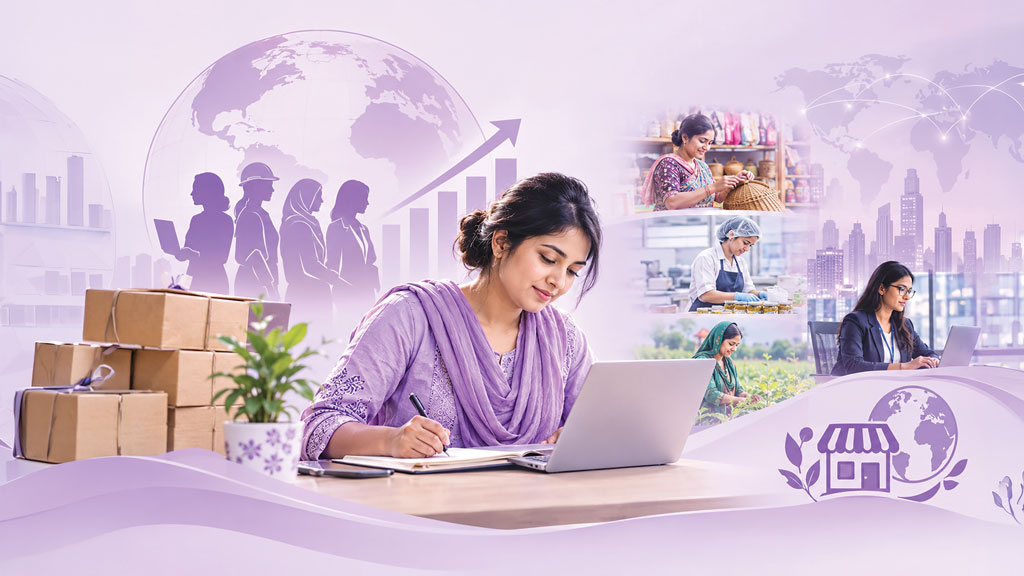
Multinational corporations grab the headlines, but it is small and medium enterprises, or SMEs, that keep national economies turning. According to the World Bank, about 90 percent of businesses worldwide are small or medium in nature, and they provide more than half of all employment.
The direction of this sector is increasingly being set by women's entrepreneurship, gender equality and policy protection. The World Bank's 'Women, Business and the Law 2026' report finds that women worldwide enjoy on average only 67 percent of the legal rights that men do, and only 47 percent of the policies and institutional frameworks needed to enforce legal protection are in place.
The Global Entrepreneurship Monitor puts the ratio of women to men among established business owners at an average of 0.69. Women entrepreneurs run about 40 percent of the world's high-potential new businesses. Trends for 2026 suggest about 25 percent of women are planning to start a new business and 58 percent are considering becoming entrepreneurs.
The biggest calculation concerns growth itself: removing gender discrimination in employment and entrepreneurship could raise global GDP by as much as 20 percent. Holding women back is therefore not only a social injustice but a major economic loss.
The United States illustrates the role of institutional support. Its Small Business Administration's Office of Advocacy counts more than 36 million small businesses, of which women run more than 15.7 million — about 40 to 40.6 percent of all firms. Yet a large share, around 90 percent, are solo ventures, so the average annual revenue of women-owned firms is far below that of men's. The government's WOSB federal contracting programme, reserving at least 5 percent of government procurement for women, has created a major expansion opportunity.
Canada is a highly structured country for women entrepreneurs. Under its Women Entrepreneurship Strategy, thousands of women have received loans and grants, and an additional 173.7 million Canadian dollars was allocated to the fund in 2026, directly supporting the growth of women-led small businesses.
SMEs are also the lifeblood of Europe. About 99 percent of European Union businesses are SMEs, creating two-thirds of employment. In the United Kingdom, about 99.8 percent of private-sector businesses are SMEs providing about 61 percent of jobs, and more than 300 signatories to the Investing in Women Code have ensured greater investment in women-led companies than the general market. Finland and Iceland, top-ranked for gender equality, are ahead in building sustainable, globally oriented startups.
In Asia, dependence on small businesses is even higher, though the challenges differ. In Indonesia, SMEs account for 97 percent of total employment and 61 percent of GDP. In India, women own about 38 percent, or roughly 36.9 million, of registered MSMEs; the country's small businesses create about 62 percent of employment while contributing about 30 percent of output.
In Bangladesh's SME sector too, women entrepreneurs play an important role in economic inclusion. According to Bangladesh Bank and the SME Foundation, special refinancing funds, low-interest loans and collateral-free financing are being arranged for women entrepreneurs.
Experts believe, however, that the sector's full potential can only be realised if digital literacy, easy-term loans and market access are expanded. Loans alone are not enough; markets to sell products and the skills to use technology must also reach women entrepreneurs.
Analysing the global picture, women in Europe and North America are advancing in technology-driven, high-growth startups thanks to stronger legal frameworks and easier venture capital. In Asia and developing countries, meanwhile, cottage industries, agro-processing and boutiques sustain rural economies and employment.
In conclusion, wherever women receive legal security, collateral-free credit and better market systems, small businesses can lift a national economy to a distinctive height on the world stage — a lesson that applies equally to Bangladesh.


