Full Text of the Makkah Defence Pact Revealed: No Country May Leave During the First 10 Years
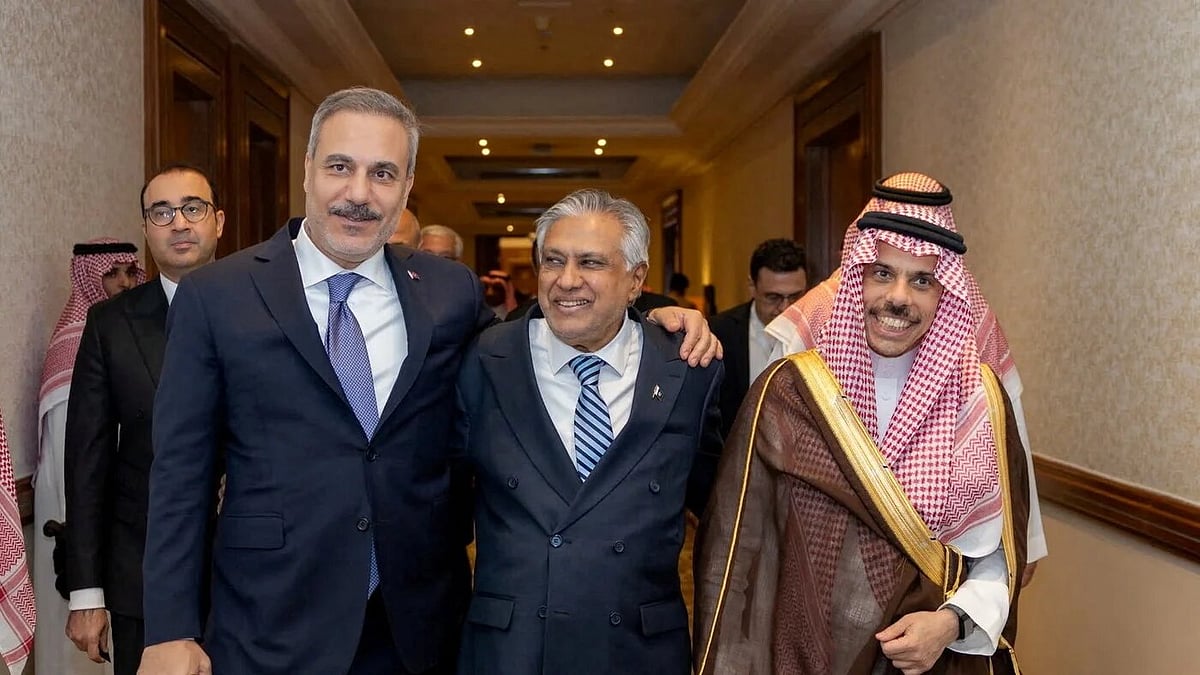
The full text of the Makkah defence pact signed by Turkey, Saudi Arabia and Pakistan has now come to light. The agreement has no fixed term, but no country may withdraw from it during the first 10 years after it enters into force.
The 16-article pact was signed in Makkah, Saudi Arabia, on 7 August. Its full text has been obtained by the UK-based news outlet Middle East Eye, and on Tuesday it was submitted to Turkey's parliament for ratification.
Article One states that if the sovereignty, territory or internationally recognised borders of any party come under threat, the other parties will use all necessary means to remove that threat. The text names no specific country or region as a threat.
Article Two is the most consequential. It provides that an external armed attack on any one party will be considered an attack on all parties. If a country faces military aggression, the others will assist immediately and, after assessing the need, may use military means within their capabilities. This cooperation rests on the right of self-defence recognised in Article 51 of the UN Charter.
The three countries will consult regularly on security and deepen cooperation against terrorism. The pact also provides for exchanges of military personnel in peacetime and wartime, joint training and exercises, and arrangements for troop deployments where necessary.
Cooperation extends to defence technology exchange, joint research, the production of weapons and equipment, and the training of specialists. Logistics support — weapons, ammunition, fuel and spare parts — will be supplied according to need and capacity, alongside intelligence sharing in the security field.
Implementation will be overseen by a joint committee of the three countries' foreign ministers, defence ministers and military chiefs, meeting twice a year in rotation in the three countries. The leaders of the three nations may also meet once a year if needed.
The pact's secretariat will be based in Saudi Arabia. The secretary-general will be appointed from the three countries in rotation for three-year terms, and the first secretary-general will be a Pakistani national. Rules for admitting new members will be decided by consensus among the three.
Strict confidentiality rules apply. Classified documents may not be given to any outside country, institution or individual; only those with a genuine need and proper security clearance may see them. The duty to protect classified material survives even if a country later leaves the pact.
After 10 years have passed, a country wishing to withdraw must notify the others in writing at least three months in advance. Withdrawal, however, will not affect ongoing activities and projects already agreed, disputes must be settled through discussion, and any amendment requires the consent of all three countries.
The pact will enter into force once all parties have completed ratification and the final instrument has been deposited with the secretariat. Signed in Turkish, Arabic and English, the English text will prevail in case of interpretive disputes, and the three countries will treat the full text as the legal basis for implementation.
Reuters reported on Wednesday that after ratification the Turkish government will seek permission to send troops to Saudi Arabia. According to a lawmaker from the ruling AK Party, the first to go will be air defence and electronic warfare specialists, who will not take part in offensive operations. Turkey has also agreed to join the Saudi-led coalition for Red Sea navigation security, condemning Houthi attacks.
Meanwhile, Turkey, Qatar, Pakistan and Indonesia signed a separate defence cooperation agreement in Doha yesterday covering military production, joint training, technology exchange and research and development. Together with the Makkah pact's ratification process, these parallel initiatives are adding a new dimension to the security architecture of the Middle East and the wider Muslim world.