Haitian migrants changed this US town—Trump's deportation drive is reshaping it again

Springfield, in south-west Ohio, was thrust into the spotlight in 2024 when President Donald Trump repeated a false claim about Haitian immigrants eating pets. In this closely fought midterm election campaign, the small town has again become a symbol of modern America—but a symbol that changes dramatically depending on who is describing it.
To Trump, Springfield crystallises America's problems after years of unchecked immigration, and he now says his mass deportation drive means its people are 'getting their town back.' To others, Springfield represents a familiar cycle in modern America: the decline of traditional industry, followed by a spike in immigration fuelled by cheap housing and low-paid labour.
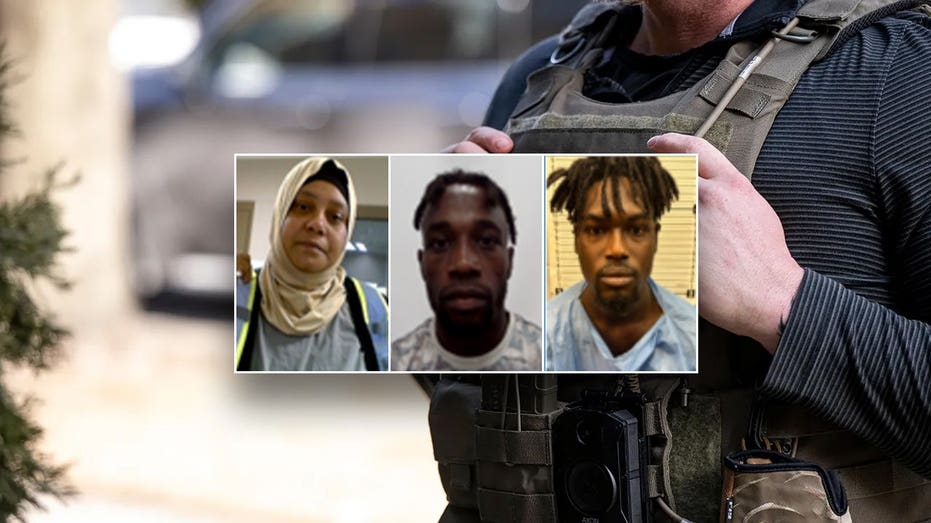
Pierre Damas Bel, 20, arrived in Springfield in 2024 to join his father and stepmother. He had fled his native Haiti, gripped by political instability and gang warfare, and entered the US with the government's permission under a now-defunct Biden-era programme for migrants waiting in Mexico.
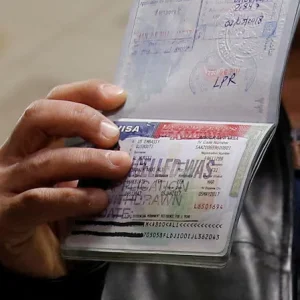
According to a family friend, Bel then received a humanitarian protection called Temporary Protected Status (TPS), which gives vetted individuals the right to live and work in the United States. TPS usually lasts 18 months but is routinely rolled over, often for years, if the danger remains in the affected country.
Bel aspired to build a life in America, the friend said. He was an honours student, a talented athlete and a cadet in a high school programme training students to become officers in the US Armed Forces.
But in June, the Supreme Court upheld the Trump administration's decision to end TPS for some 350,000 Haitians in the US. Bel was told to report to an Immigration and Customs Enforcement (ICE) field office, where he was fitted with an ankle monitor used to track migrants facing deportation.
Bel wrote on Instagram that he felt 'shame and humiliation' at having to wear the tag. On 31 August, he parked his car on the side of a highway near Springfield, walked into oncoming traffic and was killed. His family blamed his death on his feelings at having to wear the ankle monitor.
The Department of Homeland Security (DHS) did not respond to questions from the BBC about Bel's case. ICE has previously rejected 'any attempt to blame ICE for the death.' A spokesperson told US media: 'Remaining in the country illegally, while fighting removal, is a choice. Leaving with a free flight home and $2,600 is also a choice.'
In the weeks before his death, Bel attended a Springfield support centre for Haitians facing deportation. Its co-founder, Viles Dorsainvil, told the BBC that Bel had been in the process of filing a motion asking ICE to remove the tag. 'He went twice to the ICE facilities…begging them to remove the ankle monitor,' he said. 'He did everything right to be here until they put the tag on him.'
In total, more than a million immigrants from 13 countries have had TPS terminated by the Trump administration. The changes meant many went from being legal to unauthorised migrants overnight.
In 2024, Trump made securing the border and the mass deportation of undocumented migrants core pledges in his election campaign. Polls suggest the border policy continues to have strong support among Republicans, but the nature of his immigration enforcement campaign has seen a drop in backing this year.
Ohio has become a swing state in the coming midterm Congressional elections, and one of two Republican-held Senate seats is up for grabs. Trump has visited the state twice already to rally turnout and counter a slide in his approval ratings. At a rally in Youngstown earlier this month, he returned to Springfield, saying to cheers: 'You have a little town, beautiful little town in Ohio where they dropped about 35,000 Haitians. Well, they're being taken out and they're almost going to be gone and we're giving their town back.'
The administration first announced in June 2025 that it would remove TPS for Haitians, and the ensuing legal battle went all the way to the Supreme Court, which ruled in its favour in the summer. After the ruling, DHS general counsel James Percival said: 'The T in TPS stands for TEMPORARY, yet many of these designations became de facto amnesty. This is a win for the rule of law and common sense.'
In August, DHS posted a social media video of Haitians in chains wearing white uniforms being led onto a deportation flight. Set to jaunty music, the video told Haitians whose TPS had expired to 'LEAVE IMMEDIATELY'. The administration says it is conducting law enforcement operations to keep Americans safe and argues Haiti is safe enough to return to—yet the country is subject to the US State Department's highest Level 4 'Do Not Travel' danger warning.
The signs of decades of economic decline are still visible in Springfield, through shuttered factories and boarded-up homes. This part of the American Midwest was hit badly by last century's de-industrialisation, when workers laid off from its once prolific factories sought work on the coasts or migrated to warmer, southern states.
Within the last five years, a Haitian population estimated to be around 20,000 strong arrived in the town. Many fled the devastating earthquake in 2010; others left in 2021 during the violence and unrest that followed President Jovenel Moise's assassination. Springfield's population increased rapidly, and with legal status under TPS, many Haitians took low-paid jobs in factories and distribution warehouses.
Rick Johnson, a Marine veteran and a strong supporter of ICE's deportation drive, whose porch is adorned with flags, said: 'We love America, we love Americans—any kind of Americans, but you kind of have to be American.' Johnson moved into the neighbourhood a decade ago and said the loss of industry has left much of it empty: houses around him have been torn down, and his only neighbours are Haitians who 'don't really bother me.' But his concern is the numbers and the speed of change: 'Really it's the amount of them. If you come here you [should] come here legally. The Temporary Protected Status is done…it's time to go.'
In 2023, 11-year-old Aiden Clark was killed when his school bus overturned in a crash with a minivan. The van driver, Herman Joseph, originally from Haiti, did not have a valid US driver's licence and was jailed. Aiden's father, Nathan Clark, later spoke at a Springfield City Commission meeting where he denounced politicians for using his son's death as a 'political tool' to fuel anti-immigrant sentiment, saying his son was accidentally killed.
At a nearby grocery store run by Paschur Castelly, who left Haiti 20 years ago, most shelves are empty except for those stocking religious candles and framed pictures of Catholic saints popular with this devout community. 'I can't purchase new merchandise because I don't have people coming in,' he said. 'So, our communities, we have doctors, we have engineers…we came here to get a better life, to help our family in Haiti, you know? Our country doesn't offer us security.' After 20 minutes, the first customer arrived—an anonymous man who had been a warehouse worker for three years and, like others who have lost TPS, is likely to have lost the right to work. As he chatted with Castelly, he pulled up his right trouser leg and revealed a large ankle monitor. ICE has said these are part of its Alternatives to Detention programme.