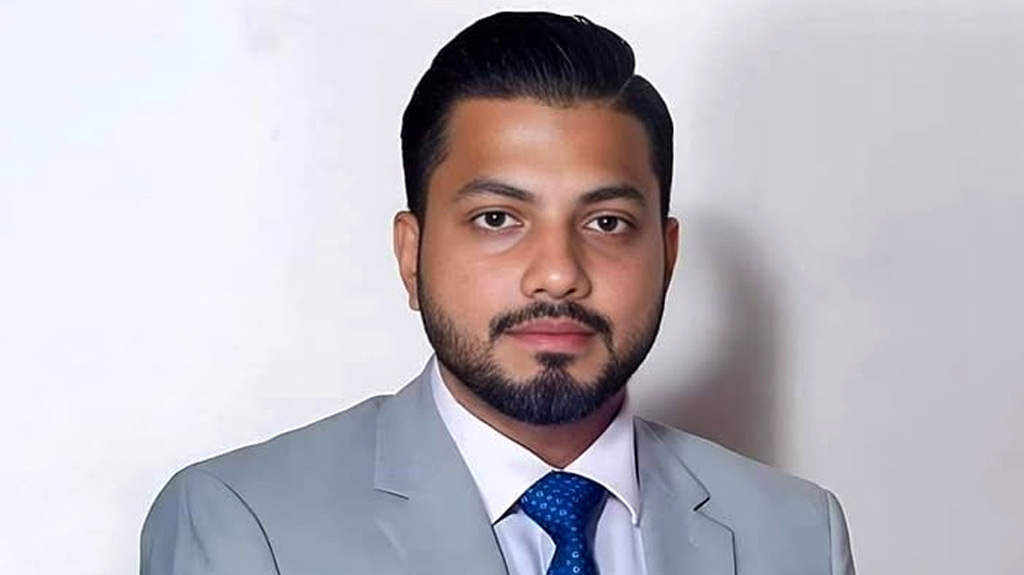
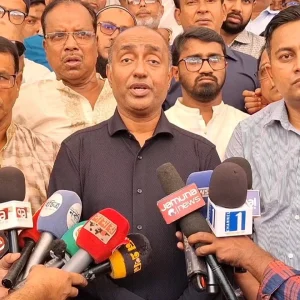
Ishraq loses ministry over pistol incident as questions return over public representatives brandishing weapons
State Minister for Liberation War Affairs Ishraq Hossain has ultimately lost his ministry after facing criticism for taking part in an anti-drug drive with a pistol in hand in public. The incident has brought back an old question in Bangladesh's politics — being a representative of the people and being a member of the law-enforcement forces are not the same thing.
On 17 October, a video of Ishraq taking part in an anti-drug drive at the Dayaganj rail gate area of Gendaria in the capital spread on social media. In the video, he is seen chasing several people with a hand-mike mouthpiece in one hand and a pistol in the other, ordering them to stop, a firearm in his hand.
Ishraq's own explanation was different. He claimed that, while building social resistance against drugs, he had cautiously displayed the weapon in self-defence because of a feared possible attack.
But an argument of self-defence and the legal acceptability of pointing a weapon in public are not the same matter. Dhaka Metropolitan Police have said they are investigating whether any breach of law occurred in the incident. And in the sequence of the pistol controversy, Ishraq Hossain ultimately had to lose his ministry.
Ishraq's incident is not entirely new in Bangladesh's politics. People in this country have seen pistols in the hands of public representatives before — sometimes on a football field, sometimes in the context of political clashes, sometimes in the heat of electoral rivalry.
Former deputy minister for youth and sports Arif Khan Joy faced allegations of entering a playing field with a pistol and threatening a referee. Joy was once captain of the national football team. The incident featured, along with various other allegations against him, in an investigative report by Prothom Alo. The allegations against Joy were not limited to the football field — his name also appeared in media reports over vandalism at the ministry and misconduct with a police officer, among other incidents. A general diary was also filed against him over allegations of assaulting a police officer in Ashulia.
In the history of pistol politics, the name of Captain (retd) Gias Uddin Ahmed deserves a chapter of its own. The former Awami League MP from Gafargaon in Mymensingh once became known simply as the 'pistol MP'. In May 2012, a clash situation developed around his car at Kandipara Bazar in Gafargaon. It was alleged that, in anger, he fired from his own firearm. Gias's claim, however, was that a group of armed men had attacked his car and he had fired blank shots to save his life.
Placing Gias's incident beside Ishraq's recent one reveals a similarity — in both cases, the argument of self-defence has come to the fore. But the question is: when state arrangements exist for a public representative's security, why does the need arise to use or display weapons in public at all? And if such a situation truly arises, who will make its legal assessment — the politician concerned, or the law-enforcement forces?
One of the gravest chapters of political weapon incidents in Bangladesh is associated with former Awami League MP Dr HBM Iqbal. On 13 February 2001, four people were killed in a shooting at a BNP procession in Malibag in the capital. The next day, newspapers published a photograph of shots being fired with a pistol from inside the procession. A charge sheet was submitted in that case against 24 people including Iqbal in 2002. After a long legal process, in November 2024 the High Court stayed an order discharging Iqbal and 14 others and directed them to surrender before the trial court.
Iqbal's incident is a reminder that political pistol episodes do not always end in social-media discussion. Sometimes their consequence is loss of life, cases, trials and legal battles lasting years.
The relationship between weapons and power is not new in Bangladesh's politics. At various times since independence, the use of firearms in political violence, intra-party feuds, electoral clashes and displays of influence has come under discussion.
Ishraq's recent incident has brought that question forward again. Whatever his purpose in going to Gendaria, his presence there with a weapon in hand in public has created an important debate. Drug prevention is undoubtedly an urgent social and state responsibility. But the method of carrying out that responsibility must also remain within the law. If a public representative himself conducts a drive, displays a weapon and chases accused persons, where lies the boundary between the duties of the police and those of a public representative — that question cannot be avoided.
From Joy to Gias, and most recently Ishraq — not all of these incidents can be judged at the same level. Somewhere there are allegations published in the media, somewhere an admitted firing incident by the person concerned, somewhere a viral video. Each has a different legal standing and level of proof. But there is a common thread through all of them — the presence of firearms in politics, and the questions of display of power and accountability surrounding it.
Just as holding a licence does not mean an unrestricted permission to frighten people with a weapon in public, being a public representative does not mean a right to take the police's duties into one's own hands either. Ishraq's loss of his ministry has recalled that boundary once again. What remains to be seen is what the police investigation into the Gendaria incident finds, and which direction this debate takes next in the political arena.