Vaccinate missed children aged six months to nine years within two weeks: experts' urgent recommendation to stop measles
A joint independent evaluation team has recommended that children aged six months to nine years who have not been vaccinated be given the measles vaccine on a priority basis to tackle the outbreak. Districts with high infection rates and large numbers of unvaccinated children should be prioritised, the team said, and the work should be carried out within two weeks.
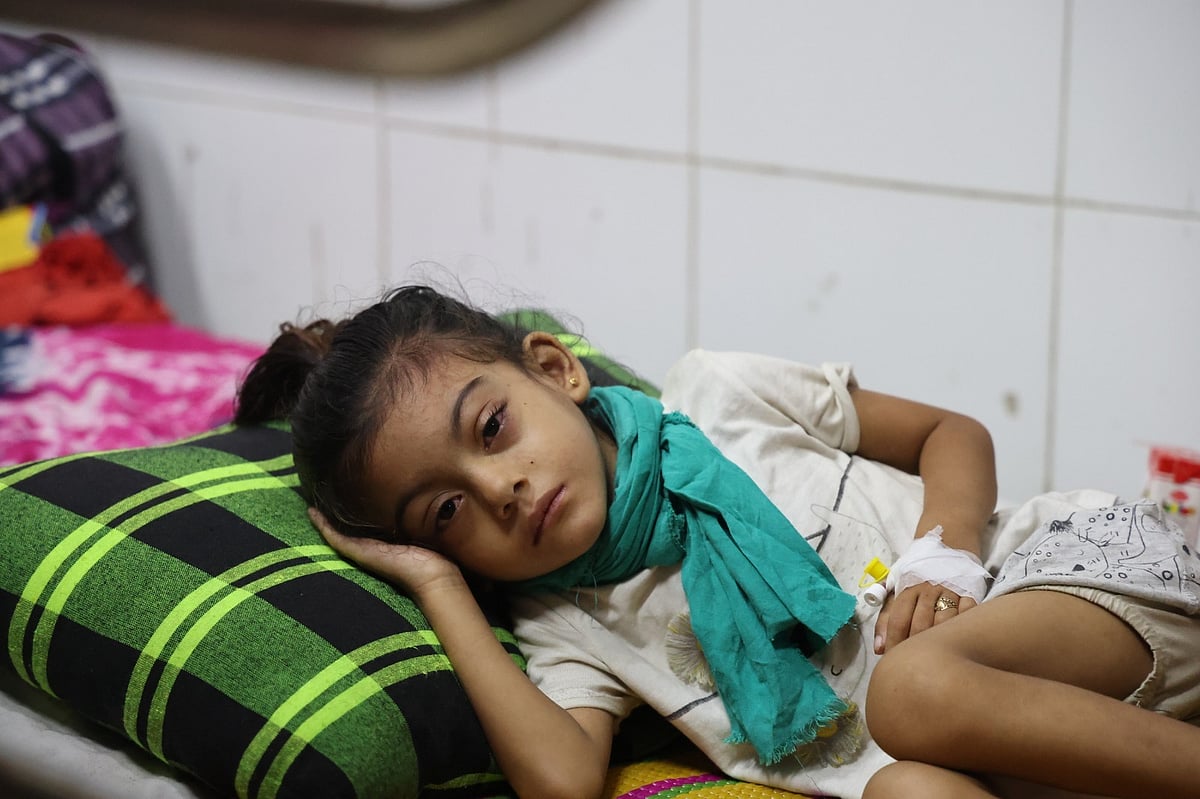
The latest figures underline the severity of the situation. A press release from the Directorate General of Health Services' integrated control room said seven people died with measles symptoms in the latest 24 hours (Saturday 8 am to Sunday 8 am), while 1,319 people came to hospitals with measles and measles symptoms during that time.
Since March 15, a total of 236,366 patients with measles and measles symptoms have come to hospitals. In that period, 1,196 people have died from confirmed measles and measles symptoms. The outbreak, which began in March this year, still shows no sign of ending.
The government had expected to control the outbreak through vaccination. The national measles-rubella vaccination campaign that began on April 5 ended on May 20. Since then the health department has continued vaccinating children missed by the campaign alongside routine immunisation, but measles has not come under control. Public health experts say the joint independent evaluation team's recommendations are therefore especially important.
The 70-member joint independent evaluation team, made up of national and international experts as part of a review of the Expanded Programme on Immunization (EPI) and vaccine-preventable disease surveillance, made the recommendations. The team includes representatives of the World Health Organization, UNICEF and the international platform for vaccine procurement and distribution, alongside local public health experts and government officials. Its evaluation was presented at a workshop at Dhaka's Sonargaon Hotel last Wednesday.
Why did this explosion happen? The team said failures in vaccination caused the measles outbreak in Bangladesh to explode. Huge numbers of children missed vaccination between 2000 and 2025, measles-rubella vaccine stocks ran out in 2025, and children older than two were excluded from routine vaccination. The country's population density and an inadequate response to the outbreak also brought the situation to this stage, the team believes.
The recommendations also say missed children and high-infection districts must be vaccinated on a priority basis right away, and that urgent steps are needed in surveillance and patient management. Identifying unvaccinated children aged six months to nine years for vaccination, and selecting districts with high infection and many unvaccinated children, must both be done within two weeks.
The experts also recommended vaccinating health workers. For younger children they have two recommendations: measles-rubella vaccine should be given at six months of age until the outbreak ends, and children around six months old should be kept separated alongside being vaccinated.
The experts called for the highest standards in measles surveillance. Basic information — name, address, age and sex — of all suspected patients (those with fever and rash) must be recorded properly. Infection prevention and control practices must be ensured in every hospital, and updated patient-management guidelines must be kept in hospitals. Active surveillance of new patients and ensuring national guidelines are followed for patients with fever and rash were also recommended.
Longer-term recommendations include updating local vaccination micro-plans so that persistently missed children in at-risk populations are brought into the programme. All eligible children must be given routine vaccines on time; the maximum age for children in the routine immunisation programme should be raised from two years to five years. The team also recommended checking children's vaccination cards at school admission so missed children can be ensured vaccination.
The team also called for timely planning of the next national measles-rubella campaign, which will probably be held in 2029 or 2030. It further recommended research into the institutional and field-level flaws that affect vaccine effectiveness, and a review of data on children under nine months old.
Mushtaq Hossain, a public health expert and former chief scientific officer of the government's Institute of Epidemiology, Disease Control and Research, said: 'Almost all of the joint independent evaluation team's recommendations are important. We too have been calling for the vaccination age for children to be raised. But community involvement in tackling measles is not in the recommendations; it seems to have received somewhat less importance.' In his view, poor people will not come to hospital without financial and medicine support — and if they do not receive treatment, controlling the infection will be difficult.
The question now is how quickly the government can identify the missed children and begin priority vaccination in the priority districts within this two-week window. The longer the outbreak lasts, the more the pressure on hospitals and the death toll grow — the pace of implementing these expert recommendations will decide when measles finally comes under control.