
'We Are Suffocating': Protests Across Europe over Housing and the Cost of Living
Protests over the housing crisis and the rising cost of living, under way for several weeks in Spain and France, have now spread to Italy and Portugal as well. After France, Spain and Albania, ordinary people are taking to the streets in one European country after another; in some places the protests are turning violent.
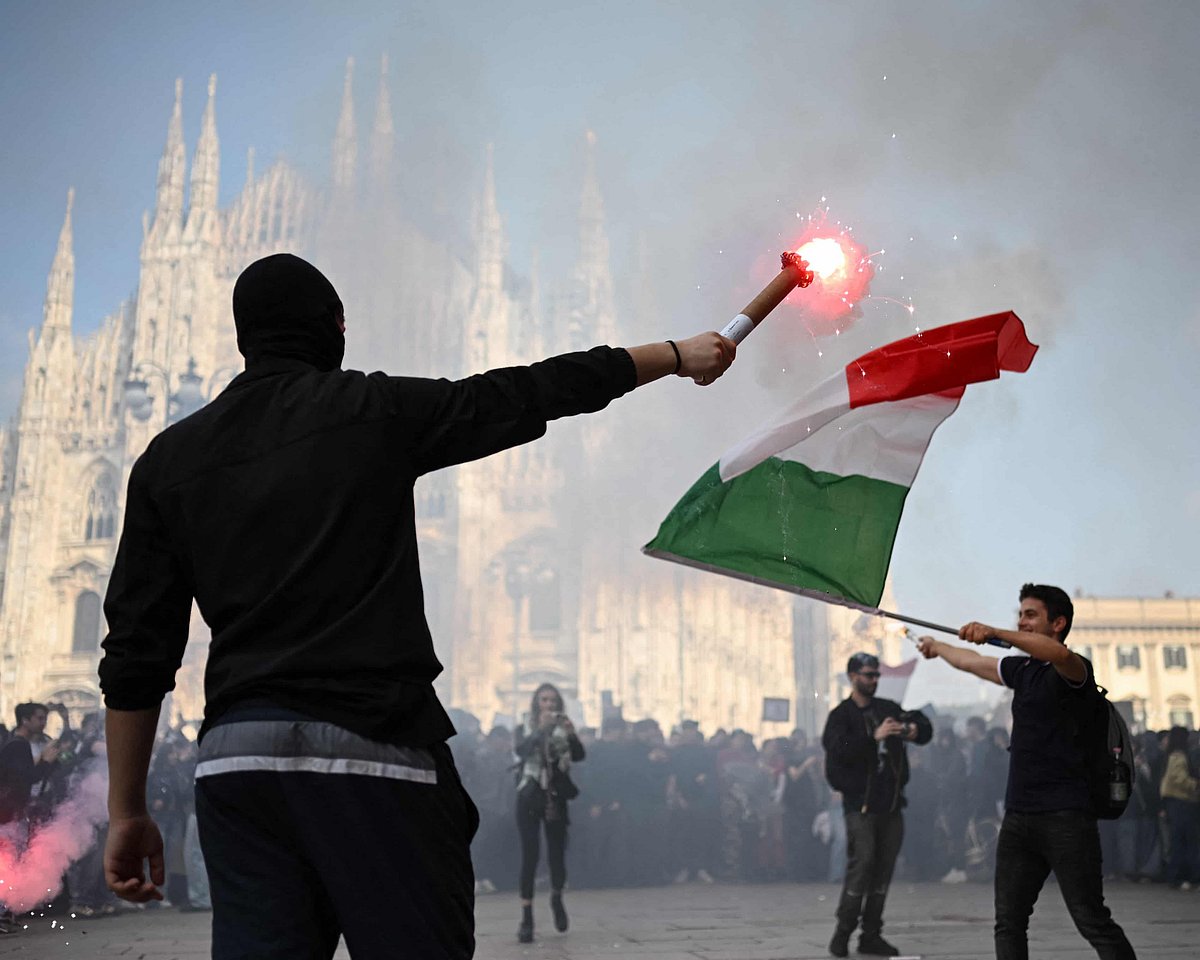
In Milan, Italy, last Saturday a march protesting the rising cost of living began peacefully. Later, however, masked protesters began throwing stones, paving blocks and various objects at riot police. They also set fire to a barricade made of restaurant tables.
Police used water cannon and tear gas to disperse the protesters. In pictures after the incident, a vehicle of Italy's Carabinieri police (the national military police force) was seen badly damaged.
The Italian news agency LaPresse reported that at least two police officers were injured in the clashes. Around 50 protesters were detained, many of them minors.
Reacting to the incident, Italian Prime Minister Giorgia Meloni said, 'Protesting is people's right. But setting fire to our cities is not a right.' In a post on social media, she alleged that some 'unruly individuals' had exploited the protest to create chaos, attacked those responsible for security and held an entire city hostage.
Milan's centre-left mayor, Giuseppe Sala, said that although the reasons for the protest are understandable, violence against law enforcement forces and widespread damage to the city cannot be supported in any way.
Meanwhile, in Portugal's capital Lisbon, the movement against the housing crisis and the rising cost of living has intensified. On Saturday, protesters there began a sit-in, pitching tents. Three weeks ago, a similar sit-in programme had begun in Spain's capital Madrid.
Thousands of people from various parts of Portugal took part in a protest march on Saturday. Later at night, several hundred people gathered at Rossio Square, Lisbon's busy tourist area, and announced they would stay there overnight. Sitting around the statue of King Pedro IV in the middle of the square, several hundred people kept singing.
Elena Costa, a 46-year-old social worker taking part in the protest, said, 'The social class in Portugal that pays taxes, whose contribution keeps this country running, is the one under attack. They are losing their rights, especially the right to housing.' Elena added, 'That is why we have all gathered here. We are trying to explain that we are suffocating.'
In Lisbon, a protester named Antonio Margado criticised his country's centre-right government. The 52-year-old engineer said the government has completely lifted controls on house rents. Landlords are increasingly getting more protection, while the protection of tenants who need a roof over their heads is decreasing day by day.
According to government data, between 2015 and 2024, housing costs in Portugal rose by 124 percent. That is roughly double the average rent increase in the European Union over the same period. The impact of this cost rise is falling most on young people and the residents of Lisbon. Portugal's population is more than 11 million, about a quarter of whom live in the Greater Lisbon metropolitan area.
Before Saturday's sit-in programme in Lisbon, protests against the housing crisis had begun in the country's northern city of Porto, where several dozen protesters had already pitched tents and taken position. Earlier, another protest was held in Lisbon at the call of Portugal's main labour organisation, the CGTP. Participants there demanded measures to control the rising cost of housing, alongside better public services, pensions and wages.
Portugal's Prime Minister Luis Montenegro said the government understands that people want to express anger over the shortcomings they perceive in government policy. But warning political opponents, he said, 'An environment of instability and protest that has no support in Portuguese society should not be imported into Portugal from other countries.' His remark is being seen as a hint at the violent protests in France.
Meanwhile, violent protests also took place in Albania this week. Protesters are demanding the resignation of the country's Prime Minister Edi Rama, protesting against university conditions and high tuition fees. On Saturday, protesters hurled stones, petrol bombs, metal objects and firework-like explosives at police. They set fire to cars and rubbish bins; protesters used these burning objects as barricades to block the police's advance. As the violence grew, police fired rubber bullets for the first time since the protests began. Despite that, the protests continued into the night. During this time, various buildings including courts, banks and post offices were set on fire, and several buildings were badly damaged. Anti-government protests have been going on in Albania for several months; the movement began over a controversial tourism resort construction project linked to the family of US President Donald Trump.
In Spain, long-standing anger over abnormal rent rises and social inequality took a fierce form last month. Behind it was the incident of an 87-year-old woman being evicted from her home. The woman's name was Maria del Carmen Abascal; she died recently. An investment firm had bought Abascal's flat, after which the firm demanded a 230 percent rent increase. Unable to pay that extra rent, she was evicted. Her plight, and the wider housing crisis that came to the fore through it, gave rise to anger across Spain; protesters also began a tent sit-in programme in the centre of the capital Madrid. After this movement, the socialist-led government proposed some emergency steps to ease access to housing and to protect people's right to housing. But the proposals were voted down in Congress by the votes of right-wing and far-right parties. After that, Prime Minister Pedro Sanchez announced that an early general election would be held towards the end of November.
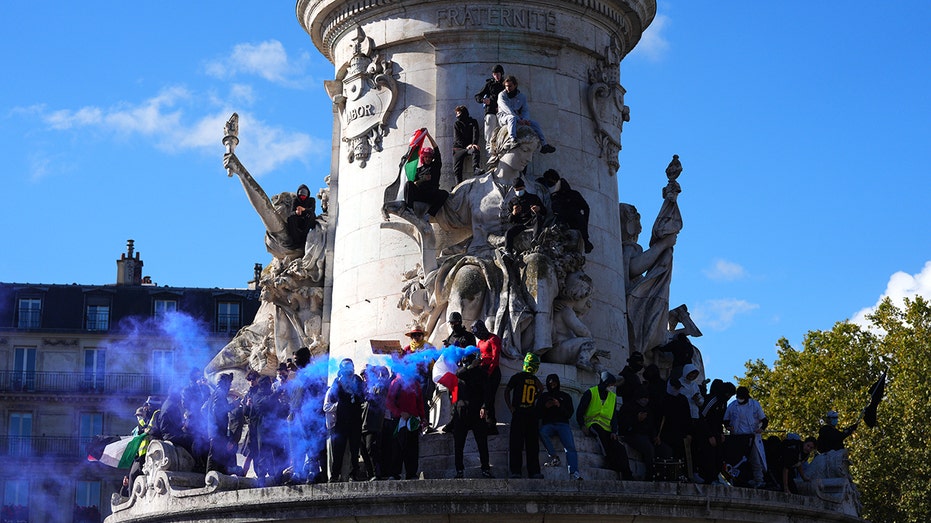
Al Jazeera reported that protests were held in France's capital Paris on Sunday as well, for the second consecutive day. That day, a huge fire broke out on a road near Place de la Republique in Paris, with billows of thick black smoke seen rising from the fire. The protests in France have spread rapidly across the country. In the beginning, anger erupted over teacher absences and dilapidated infrastructure in schools in the poor northern suburbs of Paris. Later, that movement turned into nationwide protests against social inequality, inadequate spending in the public sector and the decline in living standards. On Saturday, more than 1,200 people were arrested amid protest violence in France. That day, clashes occurred between police and people who had come out in protest in support of high school students. Later, protests went out of control in several places; various buildings were set on fire and shops were looted.
On one side, the relatively peaceful sit-ins of Milan and Lisbon; on the other, the violence of Paris and Tirana - but at the root of all the protests is the same refrain: the roof over one's head and the cost of everyday living are going beyond the reach of ordinary people. How much Europe's governments can calm this anger is now the big question.