Nine seats will determine control of the US Senate, tight fights in six
With just over two weeks left until the midterm elections in the United States, nine contests will determine control of the Senate. Completely toss-up fights are under way in six seats, and three seats are leaning towards one side — the results of these nine battles will decide whether the Democrats regain the majority, or the Republicans hold on to control.
At present, Republicans hold a 53-47 majority in the Senate. If Democrats can raise a big 'blue wave', they could get up to 52 or 53 seats in the next Senate. Again, if Republicans do better than the polls, they will be able to retain the majority.
According to the latest power rankings, both the Democrats and the Republicans are considered to be getting 47 seats each. The remaining six seats are genuine toss-ups, and three seats are 'leaners' — one step ahead of a toss-up. For Democrats to take control, they have to win a net four extra seats.
Remi Numa, who runs Fox News's power rankings, said all nine seats will determine control of the Senate, and based on the polls alone, any of them can be called a toss-up.
In Washington, the ruling party traditionally loses seats in midterm elections — Republicans are fighting against that history. Persistent inflation felt at grocery stores, high gas prices linked to the Iran war unpopular in polls, and President Donald Trump's increasingly negative approval rating have also created challenges for them.
Republicans currently hold six of the nine competitive seats, so Republicans are playing in a more defensive position than Democrats.
The six toss-up states are Alaska, where Senator Dan Sullivan is fighting re-election against Democratic candidate and former Representative Mary Peltola; Iowa, where Representative Ashley Hinson faces Democratic state Representative Josh Turek to hold the seat of retiring Senator Joni Ernst; and Maine, where the rival of long-serving Republican Senator Susan Collins is Democratic candidate and former state Senate President Troy Jackson.
Also on the list is Ohio, where appointed Republican Senator Jon Husted is fighting former long-serving Democratic Senator Sherrod Brown to fill the remaining two years of the term won in 2022 by current Vice President JD Vance. In Texas, state Attorney General Ken Paxton is facing Democratic state Representative James Talarico in the fight to succeed long-serving Republican Senator John Cornyn; Paxton had defeated Cornyn in a bitter Republican primary.
In the sixth toss-up, Michigan, Democrats are in a defensive position. To hold the seat of retiring Democratic Senator Gary Peters, candidate Abdul El-Sayed is fighting former Republican Representative Mike Rogers.
Besides, Democrats are on defence in New Hampshire — to keep blue the seat of retiring Senator Jeanne Shaheen, Representative Chris Pappas is fighting former Republican Senator John E. Sununu; this fight is being called 'lean Democrat'. In Minnesota, Democratic Lieutenant Governor Peggy Flanagan is trying to hold the seat of retiring Senator Tina Smith, but with the rise of Republican candidate Michelle Tafoya, this fight has moved from 'likely Democrat' to 'lean Democrat'. On the other hand, in red-leaning Kansas, Republican Senator Roger Marshall faces a tough re-election against Democratic candidate and pastor Adam Hamilton; this seat is 'lean Republican'.
According to Numa, the type of voters in Kansas, Minnesota and New Hampshire and the history of the states have kept them in the 'lean' position, but the map has expanded and in most cases, except Minnesota, it has gone towards red territory.
Two states now seem to be out of Republicans' reach. Georgia was a top Republican target at the start of the 2026 cycle, but Democratic Senator Jon Ossoff has held a strong lead over Republican candidate Representative Mike Collins; Republican outside groups have significantly reduced spending there and the seat is being called 'likely Democrat'. In neighbouring North Carolina, Republicans also seem to have almost given up the seat of retiring Republican Senator Thom Tillis — spending on behalf of candidate Mike Whatley has been stopped, as he is behind Democratic candidate and former Governor Roy Cooper in the polls.
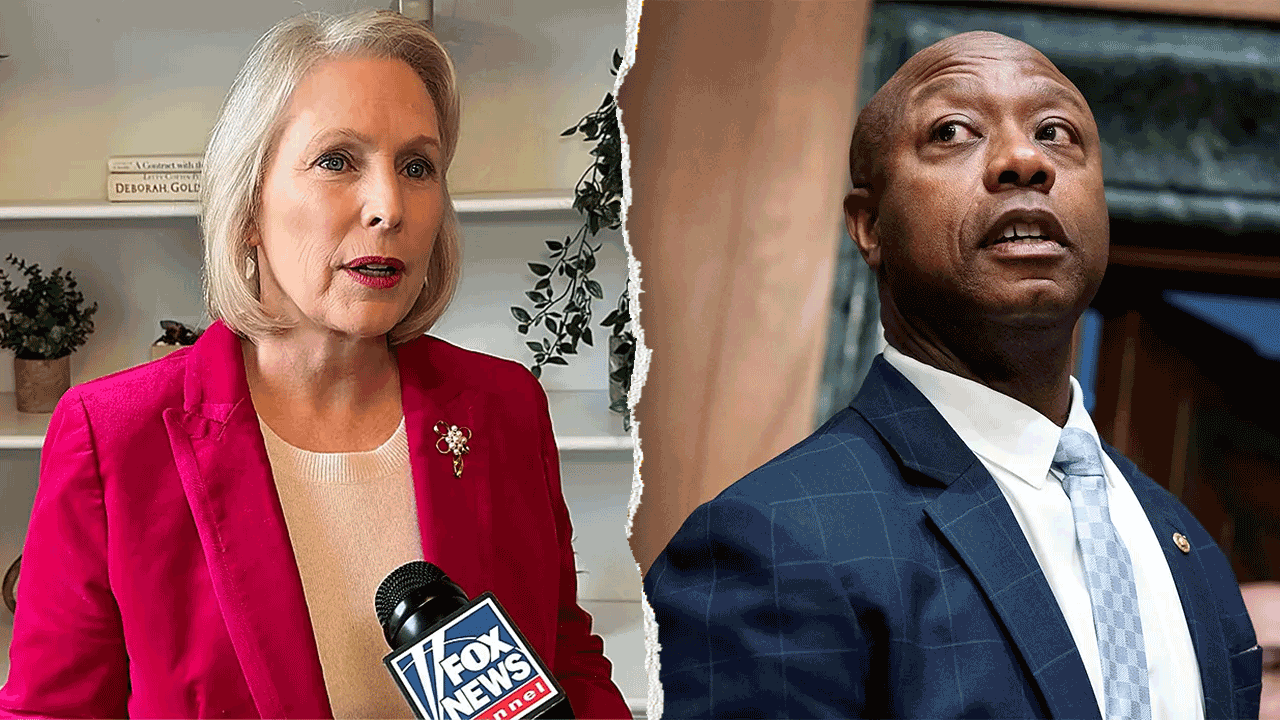
Democrats will get the majority if they hold Georgia, Michigan, Minnesota and New Hampshire, flip North Carolina and win at least three of the five toss-up states controlled by Republicans. Democratic Senatorial Campaign Committee Chair Kirsten Gillibrand said in a statement that Senate Democrats are in the strongest position to win the majority — multiple paths to flipping Republican seats and growing momentum across the map are in their favour.
On the other hand, Republicans will keep control of the chamber if they hold at least three of the toss-ups they are defending. A 50-50 Senate will also remain in Republican hands because of Vice President JD Vance's tie-breaking vote. As polling day approaches, every campaign for these nine seats is now at the centre of national politics.